Hor[a]e B[ea]te Marie ad usu[m] Romanu[m].totaliter ad lo[n]gu sine regrē[ssu]:-c(um) multis pulcherrimis suffragiis nouiter additis D[omini] Gerdii- Hardouyn commorantis Parīsius in coem[enter]io pdie nostre die ad intersignii Rose: ante con[tem]plum Divi Dionysii de Carcere
Paris : Germain Hardouyn, sans date 1514. Price $ 18,000
Half octavo/sexternions? 12 x 6.6 cm. Collation: +8, A-C8, D2-7 (lacking D1 & D8), E8, F1-2, F4-5, F7-8 (lacking F3 & F6), G1-7 (lacking G8), H-M8, N4. “lacking 5 text leaves” [A complete should be +8 A-M8 N4]? Printed on parchment throughout; lacking 5 leaves; illustrated with 12 full or nearly full page hand-colored illuminations over metalcuts painted in many colors with liquid gold highlights; with other small illustrations and initials and capital strokes also enhanced with colors throughout; text in single column in a gothic face. This is bound in later full dark calf, with clasps and catches repaired, all edges gilt.expertly restored.
Although undated, this edition belongs palaeographically and typographically to the first Hardouyn “reformed” Roman Hours printed after the Paris confraternity disputes of 1511–1512. The typeface — a sharply cut bâtarde with compact diacritics and the characteristic tall f and long-s fusion — corresponds to the font Hardouyn began using ca. 1513–1514 (see Bohatta and the Picot catalogue). The calendar style (if present) and the inclusion of the full Pichore suite also exclude the earlier 1509–1511 transitional editions. The small-format quires (sexternions), the vellum impression quality, and the elaborate hand-coloring place this securely within Hardouyn’s “second generation” Hours, produced circa 1514–1518, before the shift to simplified border sets in the 1520s
After the calendar, the illustrations begin with the ‘G.H.’ coat of arms on first leaf. The metalcut shows five angels encircling a wreath enclosing a shield bearing the monogram GH, surmounted by a radiant dove (Holy Spirit) and God the Father in a cloud above. The GH stands for Germain Hardouyn, who operated in Paris at the sign of l’Ange Gardien (“the Guardian Angel”). Earliest use of these arms as the first leafs dates from circa 1509–1510, in small-format vellum Horae (cf. Tenschert & Nettekoven, Horae B.M.V., no. 143).and continues through the 1510s–1520s, appearing in editions by Germain Hardouyn, sometimes also by Gilles Hardouyn, either in black outline or hand-colored. The other twelve Pichore-derived metalcuts; appears first in Hardouyn editions ca. 1510–1512, printed on vellum in small format, and continues to ca. 1525 with minor redrawing. Jean Pichore (fl. 1502–1521) was a Parisian illuminator, designer, and publisher who supplied drawings for both manuscript and printed Heures. His workshop specialized in small-scale compositions—ideal for transfer to metalcuts and woodcuts. The so-called Pichore group included artists and printers such as PhilippePigouchet, Simon Vostre, and later, Germain and Gilles Hardouyn. Around1508–1510, Germain Hardouyn acquired or commissioned a complete Pichore-designed metalcut suite: twelve large devotional scenes (Creation through Resurrection). These became the basis for Hardouyn’s small-format Horae on vellum. The metalcuts are characterized by crisp burin engraving on metal (not wood), compact narrative scenes framed by borders later filled with colored ink, and ability of reuse across Latin–French bilingual editions (Heures à l’usage de Rome, Paris, etc.).
Hardouyn’s innovation was to shrink the deluxe illustrated Book of Hours into a pocket 12/16mo format while keeping the same richness of decoration: these books are usually printed on vellum, hand-colored throughout. The twelve full-page Pichore-derived metalcuts as the structural spine of the book; crisp burin engraving on metal (not wood), compact narrative scenes with painted in framesfilled with colored ink, and made for reuse across Latin–French bilingual editions (Heures à l’usage de Rome, Paris, etc.).
One of Hardouyn’s innovations was to shrink the deluxe illustrated Book of Hours into a pocket 12mo format while keeping the same richness of decoration. The images here are:
1) Martyrdom of Saint Sebastian; 2) Expulsion from the Garden of Eden; 3) Annunciation to Mary; 4) Visitation of St. Elizabeth to Mary; 5) Nativity of Christ; 6) Annunciation to the shepherds; 7) Adoration of the shepherds; 8) Presentation in the Temple; 9) exodus; 10) Christ with two soldiers and a figure of death; 11) Lazarus and Dives; and 12) the resurrection.
Left Page Eiii (v)
Latin text
English translation
Deus, in adiutorium meum intende.
O God, come to my assistance.
Domine, ad adiuvandum me festina.
O Lord, make haste to help me.
Gloria Patri, et Filio, et Spiritui Sancto;
Glory be to the Father, and to the Son, and to the Holy Ghost;
Sicut erat in principio, et nunc, et semper, et in saecula saeculorum. Amen.
As it was in the beginning, is now, and ever shall be, world without end. Amen.
Hymnus.
Hymn.
Right Page Eiiii (r)
Latin text
English translation
Memento salutis auctor,
Remember, O Author of our salvation,
quod nostri quondam corporis
that once thou didst take upon thyself our mortal body,
ex illibata Virgine
being born of an undefiled Virgin,
nascendo formam sumpseris.
and by thy birth didst assume our nature.
Maria mater gratiae, mater misericordiae,
Mary, mother of grace, mother of mercy,
tu nos ab hoste protege, et hora mortis suscipe.
do thou protect us from the enemy and receive us at the hour of death.
Praesta, Pater piissime, natoque compar unice,
Grant this, most loving Father, together with thy only-begotten Son,
cum Spiritu Paraclito in sempiterna saecula. Amen.
with the Holy Spirit, the Comforter, forever and ever. Amen.
Pulchra es, Domina.
Thou art fair, O Lady.
Psalmus.
Psalm.
Nisi Dominus aedificaverit domum,
Unless the Lord build the house,
in vanum laboraverunt qui aedificant eam.
they labor in vain that build it.
Nisi Dominus custodierit civitatem,
Unless the Lord keep the city,
frustra vigilat qui custodit eam.
he watcheth in vain who keepeth it.
Beatus vir qui implevit desiderium suum ex ipsis:
Blessed is the man who hath filled his desire with them;
non confundetur cum loquetur inimicis suis in porta.
he shall not be confounded when he speaketh with his enemies in the gate.
Bohatta 971.; Not in Tenschert & Nettekoven, Horae B.M.V.vols I-IX or Lacombe 255–256 or Brunet, Heures gothique.
900J Hugo Ripelin (von Straßburg) (1200-1268 ): bound with Hieremias de Montagnone (c. 1250/60-1320/1)
Epitome al[ia]s Compe[n]diu[m] theologice veritatis non minus publicis concionatorib [us] q[uam] scholasticis proficuum.
Bound with
Epytoma Sapientie :[“Incipit compendiu[m] moraliu[m] notabiliu[m] co[m]positum per Hieremia[m] iudicem de Montagno[n]e ciuem Paduanu[m]
Colonie impress[us] in officina pie memorie He[n]rici Que[n]tell, 1506 Bound With Venetijs : Impensa Petri Liechtensteyn Coloniensis, 1505
Price $5,500
Quarto 20 cm Signatures: ad1 A-D6, E4,F-J6, K4, LM6, N4, OP6, Q4 .second Quentell edition. w/ ad2 : π4, *A-*H8, *HH6, *I-*K8, *L-*R8, *S9 (editio princeps). Lacking the Printer’s device (Zappella 1064) in red and black at end *S10) Bound together in contemporary wooden boards, with goatskin spine, one brass clasp, manuscript title. There is an ownership note with later clerical ownership inscription, followed by early shelf- or pressmark notation, Frater Lumhartis : fariderr :
ad1) VD16 H 5852, Index Aurel. XI, 256, Steer D19,
ad2) Adams; H540; EDIT 16; CNCE 20704; BM STC Italian, 1465-1600,; M444; Zappella, G. Marche dei tipografi del Cinquecento,; 1064; Essling 1494, Sander 4871
Ripelin’s Compendium Theologicae Veritatis — one of the most important Dominican theological handbooks of the late Middle Ages. The Compendium was composed ca. 1260–1270, attributed to Hugo of Straßburg, a Dominican who was a contemporary of Albertus Magnusand part of the same intellectual milieu (often their works) confused.
The Epitome / Compendium is arranged as a scholastic synthesis of theology in seven books, following Peter Lombard’s Sentences but in a more practical, didactic format for preachers and teachers: This copy has marginal annotations which suggests is was an actively used preaching copy, with contemporary marginal warnings against doctrinally dangerous sermon formulations in the Trinitarian distinctions. Annotated in multiple contemporary clerical hands, including marginal doctrinal cautions, moral abstractions, and a systematic physiognomic index keyed to virtues and vices—clear evidence of sustained use as a preaching and pastoral manual.
The above annotations to me look like:
Nota: quod contra … saepe dicunt fals. et pericul. in sermone per 3 …
Nota: quod contra [hoc] saepe dicuntur falsa et periculosain sermoneper tres [distinctiones]
“Note that against this, false and dangerous things are often said in sermons, by means of three [distinctions].” There are notations of this sort in different hands through this book of the sammelband.
The top reads “habitus assuendus merito et pat…”A habit must be acquired by merit and patience..
This page has retrieval tags.
This edition is set up in seven Distinctions, each with a pink alum tawed tab placed on each chapter.
De Natura Deitatis
De Operibus Conditoris— God, angels, and the creation of the world.
De Corruptione — The Fall, sin, and the corruption of nature.
De Humanitate Chrisi— Christology, the Incarnation, and Redemption.
De Gratia et Virtutibus — Grace, virtues, and moral theology.
De Sacramentis — The seven sacraments (baptism through extreme unction).
DeUltimis Te(m)poribus — Death, resurrection, judgment, heaven, and hell.
The Compendium was a standard theological manual for clerical education well into the 16th century — used by Dominicans, Franciscans, and university faculties. It functioned as a bridge between scholastic theology and pastoral preaching, hence the dual address: “non minus publicis concionatoribus quam scholasticis proficuum.”
Quentel’s Cologne edition (one of several around 1500–1515) circulated widely in German universities and friaries, often bound with moral or sermon material — as in this copy.
*-*
¶This is the editio princeps, of the Epytoma Sapientie edited by Petrus Trecius, of a moral compendium attributed to Hieremias de Montagnone, a Paduan judge and moral philosopher active c. 1250–1320. The Epytoma Sapientiae is a moral florilegium — a collection of “notabilia,” short sententiae and examples arranged thematically, derived from Scripture, the Church Fathers, Aristotle, and classical moralists. It contains passages from the Bible and various classical authors, including, rather surprisingly, Catullus, for whom it is an important source book. (See Gaisser, Catullus and His Renaissance Readers, p.19) It is divided into books or chapters on:
Virtues and Vices (e.g. De caritate, De superbia, De patientia),
Conditions of life (e.g. De rege et principe, De iudice, De paupere),
Moral exempla for sermon use,
Short allegorical glosses and proverbial sayings.
The text thus served as a moral index or preacher’s aide — a mirror of virtues suitable for use alongside Hugo’s theological compendium.
Ad II, urn:nbn:de:bvb:12-bsb10165554-2; urn:nbn:de:bvb:12-bsb10203466-8; EDIT16 CNCE 20704. US Copies: U of Chicago , Ohio State, U of Penn.
3). Annotated 1516
985J: (Compiled by Paulus Diaconus ca. 720-797) Augustinus, Aurelius,;Beda Venerabilis; Hieronymus; Ambrosius; Origenes; Ioannes Chrysostomus; Gregorius I [pope].
Basilee : Per Ioannem Frobenium excuse:1516 Price $9,500
Folio: 32 x 22?cm. Signatures: a-z6 aa-cc6 dd-ee8 A-N6.( Part II lacks leaves J3 and J4 as well as the final leaf N6) This copy has been professionally restored, resewn, and reback, preserving original beach boards with 2 brass clasps. The 1516 reprint is distinguished from Froben’s first edition of 1513 by its title-page bearing the printer’s newly adopted caduceus device with the motto Prudens simplicitas, amorque recti, replacing the earlier basilisk mark. This copy is annotated throughout! (more about that soon)
Compiled by Paul the Deacon at the request of Charlemagne, the Homiliary was one of the foundational achievements of the Carolingian renewal of learning and religious life. By assembling authoritative sermons of the Latin and Greek Fathers according to the liturgical year, it established a common body of patristic exegesis for preaching throughout the Frankish Empire. The Homiliarum became one of the principal instruments by which the Carolingian program of ecclesiastical education, liturgical uniformity, and biblical interpretation was transmitted to succeeding generations. For nearly seven centuries it remained a standard resource for monasteries, cathedral chapters, universities, and parish clergy throughout Western Europe.
Johann Froben first printed an edition of Paul the Deacon’s Homiliary in Basel in 1513, reprinting it in 1516. That a substantial folio like this warranted a reprint within only three years demonstrates the continuing demand for, and authority of, this Carolingian compilation among the humanists of the early sixteenth century. Produced in the circle of Erasmus and issued only a year before Luther’s Ninety-five Theses, the volume occupies a remarkable historical moment. It preserves the common patristic inheritance of Western Christendom at the culmination of more than seven centuries of continuous transmission, just before that shared tradition entered the diverse confessional currents of the Reformation.
Adams,; H816;[part 2] Isaac 14157;VD16 P 1053 ; Panzer, Ann. Lat. 198, 167; VD16; P 1053;
Quarto 21 x 13 cm. Signatures: A⁴. First edition (one of four) With nearly full-page woodcut on title by Heinrich Vogtherr after Albrecht Dürer’s Narrenschiff design. Bound in an Antiphonal leaf over boards.
A rare and striking satirical pamphlet from the turbulent early years of the Reformation, issued in Augsburg only months after the Diet of Worms (1521). The anonymous author—likely one of the humanists and reformers sheltered at Franz von Sickingen’s castle of Ebernburg made the castle famous in the time of the Reformation. He granted protection to early followers of the Reformation and waged war – unsuccessfully – against spiritual and secular princes. (among them Ulrich von Hutten, Eberlin von Günzburg, Johannes Kettenbach, Martin Bucer, and Hans Schweblin)—mounts a scathing indictment of both ecclesiastical and secular authorities.
The author charges the catholics with arbitrariness and neglect of their people’s spiritual and physical welfare, aligning the text with the radical anti-clerical rhetoric that helped shape the popular face of Luther’s cause.
The title woodcut, by Heinrich Vogtherr the Elder, reworks an image from Sebastian Brant’s Narrenschiff as illustrated by Dürer, linking the folly of the clergy with the emblematic iconography of the “Ship of Fools.” This visual repurposing underscores the continuity between late medieval humanist satire and the biting pamphlet literature of the Reformation.
The pamphlet belongs to a group of four satirical and polemical tracts produced at Ebernburg, the so-called “Reichsburg der Reformation.” All were disseminated rapidly and widely, signaling the castle’s importance as a hub of radical print in 1521. This edition is one of four known from that year: Augsburg (this, Erhard Oeglin’s heirs), another Augsburg issue by Jörg Nadler, one from Strasbourg, and one from Erfurt. Surviving copies are scarce, often incomplete, and almost always in institutional collections.
VD16 D 1164 (this edition). Benzing, Lutherbibliographie, no. 1832.; Knaake, Ulrich von Hutten und die Ebernburger Drucke, pp. 42–46.
[Colophon:] Nurnberge impressum est hoc Iuuenalis opus cum tribus commentis per Antonium Koberger, MCCCXCVII die vero vi Dece[m]bris. Price $31,000
Folio 30.8 x 21.5 cm. Signatures : A8a–z8&6. This copy is bound in its original * blind stamped half pigskin over wooden boards, lacking clasps.
This copy has been densely annotated by a German humanists circa 1511. This is an important edition with three commentaries from the end of the 15th century by great figures of Italian humanism and following the Venetian edition of Tacuio, 1494/1495-[ISTC ; ij00663000.] Mancinelli; Domizio Calderini and finally, the one by Giorgio Valla, which has a philological importance: reproducing the ancient scholia from a now lost manuscript.
Provenance: 1.German reader, early 1510s. 2. Transfer stamp ” Vend. ex bibl. acad. Rhen.” (“Sold by the Prussian Academy Library,” former library of the University of Bonn, the stamp “Bibliotheca Accademiae Borussicae Rhenanae”, was apparently used in the period 1818-1828. 3. 17th century owner (note on title page with reference to the in-12 Juvenal-Perse published in Amsterdam with Farnabius’ notes in 1631). 4. Marquis Giuseppe Terzi of Bergamo (1790-1819). It does not appear in the catalogs of the sales held in Paris between March 11 and 23, 1861. 5) Joseph Nève, lawyer and bibliophile from Brussels (1857-1940) 6). The book is later in the collection of Jean-Baptiste Colbert de Beaulieu (1905-1995) (ex-libris). 7). It is then in the collection of Jean Stefgen, Joinvillele Pont (1927-2017, bookplate).
A copy profusely annotated (up to satire 6) by a German reader in the first decade of the sixteenth century, as indicated by the diacritical sign above the u’s, its spelling Yason (for Jason), apoptegmata (without ‘h’). This incunabulum is found in its interesting first binding, Rhenish, half pigskin stamped and bound over wooden boards
.****Our German reader most likely annotated the work while it was still in quires and disbound, but maybe sewn indeed, some notes aredeep in the inner margin. The work was probably annotated before being bound, which caused some minimal trimming of the outside marginal notes.****
The sources used by the annotator display a strong knowledge in Rhenish humanism, around 1511. This reader was obviously educated in a circle close to the young Beatus Rhenanus and most likely Jakob Wimpfeling at the crossroads of classical and Christian culture. His reading is indeed a mixture of Italian philological and historical commentaries and works of northern humanism (Reisch, Erasmus). Several notes reveal the use of a series of editions published in Strasbourg in 1511: the Hymni heroici tres of Jean-François Pico de la Mirandole with the annotation of Beatus Rhenanus, the collection of ps. Bérose published by Grüninger (with a text of pseudo Xénophon). Our anonymous reader reads Erasmus’ Adages in an edition by Schürer (c. 1511) and the Praise of Folly, the first editions of which also date from 1511 (Paris, Gilles de Gourmont and then M. Schürer). XXI v.
The annotator also has recourse to contemporary Italian encyclopedias (Enneades by Sabellico, Commentarii by Volaterranus) to which he adds the reading of Reisch’s Margarita philosophica, the jewel of northern humanism (the editio princeps dates from 1504). The annotator refers to a passage of this work (Book VII, chapter VII) where Atlas is presented as the inventor of astronomy (note on f. CXIIIr: “Atlantem caeliferum fuisse negat Lucrecius. Lege, invenies in Margarita ex Plinio, li 7 ca 2” etc). These readings and references to the editions of 1511 make us think that the annotator plausibly followed a university course held in Strasbourg around 1511, always in the close circles frequented by Beatus Rhenanus.
The humanist commentary here focuses on word radicals, lexicon,and context (the annotator mobilizes printed commentaries), with little interest in figures. He shows a predilection for natural history (Pliny and Solinus very much in demand) and Roman history in general (the annotator resorts as well to Suetonius as to modern commentaries such as Philippe Béroalde and Sabellico, (see page 58 of this catalogue) whose Enneads he quotes several times, f. XXIV v for example).
This erudite reader sometimes commits approximations in his references: he confuses for example a title of the pseudo-Xenophon with a collection of the pseudo-Beroses. A long quotation of a passage that he attributes to Philippo Beroaldus (the Elder) on f. XXVIIr comes in fact from the Annotationes centum and not from his commentary on Suetonius (see Anthony Grafton, “On the Scholarship of Politian”, Journal of the Warburg, 1977, p. 166). He recopies from memory (incorrectly) on f. VI a licentious epigram by Martial (book VI, 67) & notes in the margin, still on this verse but this time about eunuchs: “Martialis / Cur tantium eunuchos uxor tua Caelia quaeris / Pannice vult futui (Caelia) non parere.” The annotator also has recourse to the vast Latin poetic heritage: Ovid and Seneca on f. II (Vide Ovidium Transformationum… Vide Senecam in Agammemnone); Horace, Satire VI, I (on f. XVr). Also to some poets of late Latinity like Sidoine Apollinaire through an incunabula edition (1498) with commentary. He also gives some suggestions for corrections to the text: f. LIX r to the lemma “caldum”, he refers to the Attic Nights of Aulu Gelle: “emendatius caldus haud (…) quam calidum apud Gellium caldam saepeponitur li 19 ca 4″.Some other notes are:•A reference to the practice of hunts (venationes) in the circus under Domitian, with an anecdote of a certain Maevia descended the pointrine naked in the arena (f. V r). It reproduces the words of an ancient scholiast of Juvenal: ” Alia indignatio in mulierum impudentiam quae temporibus Domitiani descendebant (?) in venationes et pugnas theatrales ” (words of the scholiast of Juvenal).on the title page, two references to Italian miscellanea from the end of the 15th century.
•On the title page, two references to Italian miscellanea of the end of the 15th century: one to the freedom of poets to slander, which refers to Pietro Crinito’s De honestis disciplinis (lib. 20 ca. IX), and the other to a complicated passage of Juvenal explained in chapter 33 of the Miscellanea of Ange Politien (Expositio hujus carminis Juvenalis scilicet occidit miseros Crambe repetita magistros in Miscellaneis ca. 33) This chapter of the Miscellanea explains the very graphic proverb Occidit miseros Crambe repetita magistros which appears in Juvenal’s Satire VII (v. 154), which can be translated literally by “It is from this cabbage unceasingly re-served that unhappy masters die” to denounce the repetition to which masters are forced.
The natural history of Lancashire, Cheshire, and the peak, in Derbyshire: with an account of the British, Phœnician, Armenian, Gr. and Rom. antiquities in those parts. By Charles Leigh, Doctor of Physick.
Oxford: Printed for the Author; and to be had at Mr. George West’s, and Mr. Henry Clement’s, Booksellers there; Mr. Edward Evet’s, at the Green-Dragon, in St. Paul’s Church-yard; and Mr. John Nicholson, at the King’s-Arms, in Little-Britain, London, 1700 . Price $3,500
Folio, 8 3/5 x 13 3/5 in..Signatures: π2, A2, a2, [a]1, b-c2, π5, ***2, B-Z2, Aa-Tt2, π6, A-Z2, Aa-Bb2, A-S2, [t]-[v]2, T-V2, π2, X-Z2, Aa-Oo2, Aaa-Ddd2. COMPLETE First edition. Overall, this is a really lovely copy. It is bound in nineteenth century quarter calf over decorated paper boards recently rebacked. The illustrations in this book are magnificent. They consist of twenty-two full-paged engravings of fossils, caves,
and other geological sites; a double-paged map with contemporary coloring; two pages of the arms of the subscribers; and a portrait of the author after Faithorne.
Leigh, remembered primarily as a naturalist and a Fellow of the Royal Society, was a physician by profession. He published several works, “the most important of which is a ‘Natural History of Lancashire, Cheshire, and the Peak of Derbyshire’.” (Thomas)
Leigh’s approach, while empirical in cataloging natural phenomena, often intertwined observation with speculative explanations. For instance, he presented fossils and unusual artifacts as evidence of a global flood, a perspective rooted more in theological interpretation than in the rigorous skepticism Descartes championed. However, Leigh’s detailed observations of the environment, flora, and fauna reflect an early attempt at systematic classification, akin to the empirical aspects of Cartesian methodology. His work also mirrors the era’s fascination with the “wonders” of nature, blending scientific inquiry with the mystical and the unexplained.
The text of this volume is most intriguing; it is, all in one, a catalogue of antiquities, an archaeological survey, and a freak show, medical book and classical history book. This book embodies the transitional phase of early modern science, where observation began to challenge traditional narratives, yet was still deeply influenced by them. Leigh’s work serves as a testament to the evolving nature of scientific inquiry during the period. One of the author’s many goals is to demonstrate and prove, by producing artifacts and animals from far flung corners of the world, that a huge flood covered the whole earth and dislodged hippos from the homelands, planting them in the mud of Lancashire. His investigations begin with a description
of the weather and the physical environment (the temperature and pressure of air, the “principles” of mineral waters, soil and coal, minerals and metals) and performs experiments to demonstrate the properties of these various substances and their effects upon humans and animals. He also describes the flora and fauna, with several long passages on trees and plants, and an entire chapter dedicated to marine biology and “Fossile Plants”. With this evidence, Leigh ‘proves’ the historical reality of the “Universal Deluge” by producing artefacts in Lancashire that were never naturally occurring and therefore must have been swept to England in the Flood.
‘In Book II, Leigh turns to a discussion of Physick, beginning with a description and comparison of variously textured solid substances, including shells, taken from “a man’s leg, a man’s stool, the bladder of a hog” and other surprising places. The rest of the second book concerns various ‘distempers’ including an account of a “The Pestilential Fever raging in Lancashire, in the years 1693, 94, 95, 96”. Leigh discusses the symptoms of each illness, provides case studies, offers medicinal cures, and posits causes, giving the reader a vivid and unadulterated understanding of the state of 17th century Medical arts.
Wing L975.
The Dictionary of National Biography, 1885-1900, Volume 32 tells us, LEIGH, CHARLES (1662-1701 ?), physician and naturalist, son of William Leigh of Singleton-in-the-Fylde, Lancashire, and great-grandson of William Leigh [q.v.], B.D., rector of Standish, was born at Singleton Grange in 1662. On 7 July 1679 he became a commoner of Brasenose College, Oxford, where he graduated B.A. on 24 May 1683. Wood records that he left Oxford in debt and went to Cambridge, to Jesus College, as is believed. He graduated M.A. and M.D. (1689) at Cambridge. He was on 13 May 1685 elected F.R.S. When Wood wrote his ‘Athenæ Oxonienses,’ Leigh was practising in London; but he lived at Manchester at a later date, and had an extensive practice throughout Lancashire.
Some of his papers read before the Royal Society are printed in the ‘Philosophical Transactions,’ and he published the following separate works: 1. ‘Phthisologia Lancastriensis, cui accessit Tentamen Philosophicum de Mineralibus Aquis in eodem comitatu observatis,’ 1694, 8vo; reprinted at Geneva, 1736. 2. ‘Exercitationes quinque, de Aquis Mineralibus; Thermis Calidis; Morbis Acutis; Morbis Intermittentib.; Hydrope,’1697, 8vo. 3. ‘The Natural History of Lancashire, Cheshire, and the Peak in Derbyshire; with an account of the British, Phoenic, Armenian, Gr. and Rom. Antiquities found in those parts,’ Oxford, 1700, fol. This contains a good portrait after Faithorne as frontispiece. He also wrote three pamphlets in 1698 in answer to R. Bolton on the ‘Heat of the Blood,’ and one in reply to John Colebatch on curing the bite of a viper.
He married Dorothy, daughter of Edward Shuttleworth of Larbrick, Lancashire, with whom he received a moiety of the manor of Larbrick, afterwards surrendered in payment of a debt owing by Leigh to Serjeant Bretland. He left no issue. His widow died before 1717.
He is said to have died in 1701, but there is some doubt on this point, as Hearne, writing on 30 Oct. 1705 (MS. Diary, iv. 222), says : ‘I am told Dr. Leigh, who writ the “Natural History of Lancashire,” has divers things fit for the press, but that he will not let them see the light because his History has not taken well.’
[Wood’s Athenæ Oxon. (Bliss), ii. 643, iv. 609; Fish-wick’s Kirkham (Chetham Soc.), pp. 183, 189; Nicholson’s Engl. Hist. Libr. ed. 1776, p. 13; Earwaker’s Local Gleanings, 4to, i. 68; Ormerod’s Cheshire (Helsby), i. xxxiii; Dugdale’s Visitation of Lancashire (Chetham Soc.), p. 183; Malcolm’s Lives, 1815, 4to; Whitaker’s Whalley, 1818, p. 26; Gough’s Brit. Topogr.; Corresp. of K. Richardson of Bierley, p. 25; Raines’s Fellows of Manchester College (Chetham Soc.), i. 184; Derby Household Books (ChethamSoc.), p. 119; Thoresby’s Corresp. i. 390; J. E. Bailey’s MSS. in Chetham Library, Bundle No. 7.]
671J Titus Livius (59BC-AD17) , Marcus Antonius Sabellicus.(1436-1506); Johannes Andreae, and others
[Titi Livii Historiae romanae decades I, III-IV, cum Johannis Andreae Epistola et L. Flori Epitome decadum XIV. Praemittuntur M.A. Sabellici epistola et annotationes.].
Venice : (no printer) [Johannes Rubeus Vercellensis], 5 Nov. 1491 Imprint: [Matteo Capcasa (di Codeca)], [Although the types are indistinguishable, the layout suggests Rubeus rather than Capcasa as the printer (Sheppard)]
Price: $12,000
There seems to controversies over who printed this volume. Goff, CIBN, IGI, and Polain assigns it to [Matteo Capcasa (di Codeca)]: Sheppard notes that, although the types are indistinguishable, the layout suggests Rubeus rather than Capcasa as the printer. BMC and Hain suggest another 1493 edition.
Super-chancery folio: 33.5 x 22 cm. Signatures π6, a10 b6 c10 d-n8aa-ii8 kk-ll6, A-G8H10 (π6, a1,n8 blank and present) Bound in sixteenth century vellum.
Provenance: Contemporary and later scholarly marginalia in several hands. Later in the library of Robert de Billy(1869–1953), French ambassador and friend of Marcel Proust, with his engraved armorial bookplate. Sold at the Henri Godts sale, Brussels, 14 October 2014. Ownership note: “Al Mag.co…” strongly suggests a formula of address, possibly a dedication to a Magnifico patron or owner. Could be linked to a Florentine or Venetian context. This copy is profusely annotated, from beginning to end by a clear contemporary hand.
The present example is remarkable for its continuous contemporary marginalia: a running index of names, places, and events throughout the prima decade to the quarta decade, liber decimus. The annotator systematically extracts auctores on every page, producing a personal epitome of Roman history. More than this, he interweaves cross-references to other authorities — Augustine, Varro, Aulus Gellius, Virgil, and Cicero among them — and transcribes entire ritual formulae (the devotio Decii of Book VIII) and antiquarian notes (on banquets, kinship terminology, etc., from Gellius). The effect is to transform a standard Venetian Livy into a working commentarius, a kind of personalised critical edition. From the very first leaf, an early Italian hand has turned the book into a working commentarius. Every page bristles with marginalia: lists of names, places, and episodes, effectively a running index of Roman history from the fall of Troy through the early Republic. But the annotator goes further. He checks Livy against Augustine, Varro, Aulus Gellius, Virgil, and Cicero, transcribes entire ritual formulae like the devotio Decii (Livy VIII), and even copies antiquarian notes on banquets and kinship. At the front, a vernacular maxim “La religione è cosa sopra tutte l’altre si stima” shows the book being read not just historically, but morally. Our annotator the reader turns Livy into a kind of personal index & commonplace book. At the beginning, the notes are dense, listing auctores in long chains (Virgil, Augustine, Cicero, etc.), then throughout Books I–X each page gets its marginal catchwords: names, places, episodes, authorities. The effect is cumulative: a running epitome and concordance of Livy.
Fifteenth century Humanists saw Livy’s work as a model of classical eloquence, and his emphasis on traditional Roman virtues and stoicism proved immensely influential on Renaissance humanism. Additionally, Livy’s emphasis on the power of human agency in historical events was praised as a rejection of fatalism and a sign of the Renaissance focus on individualism and human potential. The text of Livius’ History survives in ten books referred to as Decade, but only three of the original fourteen were known in the late Middle Ages, with the first, third, and fourth books eventually circulating together.
His work was highly influential in the Renaissance and was widely read during the 15th century, particularly in Italy. Several Italian humanists, such as Leonardo Bruni and Poggio Bracciolini, made extensive use of Livy’s works in their own writings, and it is thought that Livy’s work played a significant role in shaping the humanist movement. “The Renaissance was a time of intense revival; the population discovered that Livy’s work was being lost and large amounts of money changed hands in the rush to collect Livian manuscripts. The poet Beccadelli sold a country home for funding to purchase one manuscript copied by Poggio. Petrarch and Pope Nicholas V launched a search for the now missing books. Laurentius Valla published an amended text initiating the field of Livy scholarship. Dante speaks highly of him in his poetry, and Francis I of France commissioned extensive artwork treating Livian themes; Niccolò Machiavelli’s work on republics, the Discourses on Livy, is presented as a commentary on the History of Rome.”
On the last leaf our annotator leaves us three interesting messages.
Hic mihi Cæsar numerat tesseram Iunio Calavius Sic geminino dicto consilio petit insidioser, si audis bello Catroni Ita tibi geminos miles et socios erit
“Here Caesar gives me the watchword: Junius Calavius. Thus, by such a twin-named plot, he seeks treachery. If you listen, in the Catronian war, so you will have twin soldiers and allies with you.”
Iane, Iupiter, Mars, P. Quirine, Bellona, Lares, diui nouensiles, di indigetes, diui quorum est potestas nostra, hostiumque, di manes, vos precor, ueneror, veniam peto feroq[ue], uti populo Romano Quiritium uim uictoriam prosperetis, hostesq[ue] populi Romani Quiritium terrore formidine morteq[ue] afficiatis. Sicut uerbis nuncupauimus, ita prore publica Quiritium legionibus auxiliis populi Romani Quiritium legiones auxiliaq[ue] hostium mecum dis manibus deuoueo.
Conuiuium munus, incipe oportere a graui numero, et progredi ad minutas; id est proficisci a tribus, et conuenire in nouem: ut cui paucis. Conuiuae sunt, no pauciores sint tres, cum strennui no plures. Conuiua tamen multos esse no conuenit, quia turba est turbulenta. Haec M. Varronis refert Gellius lib. xij. cap. xi. Ipsum deinde conuiuium constituit ex grauioribus rebus, et sic denique ubi suis muneris absoluti est, sa. Belli. Conuiualiis collecti sunt, si lection locus, si tempus lectum, et apparatus no negligi. — Soror appellatur, eo quod secorum nascitur, separata ab ea domo, qua nata est et in aliam familiam transgreditur. Frater dictus est, quasi feriator. (Gellius. lib. xij. cap. x.).
This is the devotio, the ritual self-sacrifice of a Roman commander (here, famously Decius Mus). In Livy, this occurs in Book VIII (8.9–10), where Decius Mus vows himself and the enemy army to the gods of the underworld in exchange for Roman victory. The annotator has copied the verbatim ritual formula that Livy transmits — almost like a liturgical text. It’s written out carefully, with a heading, as though for reference or even recitation. This is a direct lift from Livy, not just a marginal note. The annotator is treating it like a ritual formula worth preserving on its own. This depicts the Humanistic interest in Roman religion, ritual, and antiquarian detail — not just narrative history. The presence of such a formula in the margins suggests the annotator thought this passage had special importance (maybe as a model of piety, patriotism, or Roman ritual exactitude). It also aligns with Renaissance antiquarian interests: Roman law, priestly formulas, ritual language things rediscovered and studied alongside Livy.
Yet another book I could spend not just hours but months reading through.
“The Magnalia does not simply narrate Puritan New England—it stores New England, gathering its poetry, polity, institutional memory, and spiritual self-understanding into a single monumental folio.” Michael Windship
MAGNALIA CHRISTI AMERICANA: OR, THE ECCLESIASTICAL HISTORY OF NEW-ENGLAND, FROM ITS FIRST PLANTING IN THE YEAR 1620. UNTO THE YEAR OF OUR LORD, 1698. IN SEVEN BOOKS.
London: Thomas Parkhurst, 1702. Price $12,000
Folio, 32×20 cm. Signatures A-C4,D2:[Book I] map, A-F4, Aa-Ii4,Kk2, Aaa-Uuu4, Xxx-Zzz4, Aaaa-Gggg4, Aaaa-Mmmm4, Nnnn2, Aaaaa-Mmmmm4,Nnnnn2 Aaaaaa-Llllll4,Mmmmmm2 Aaaaaaa-Ooooooo4,Ppppppp3, +2 ( the first page of advertisements signed A6 the next leaf of advertisements unsigned these were very browned then washed and stabilized) Bound in original paneled calf, rebacked in the nineteenth century. Over stamped with the arms of The writers of the Signet in gold on both boards in the 19th century . Original map mounted. The contents has been amended in pen with page number (which is quite helpful).
As Mather biographer Kenneth Silverman explains, the Magnalia Christi Americana, as published in the first London edition of 1702:
“was unmistakably a grandly imagined and formidable work: about eight hundred folio pages of double columns, divided in seven substantial books – history of the settlement of New England; lives of the governors; lives of the leading ministers (the longest book); history of Harvard College, with the lives of eminent graduates; account of the New England manner of worship; ‘Remarkables of Divine Providence’; and a history of the invasion of the New England churches by heretics, Andros, devils, Indians, and others. Mather gathered this information industriously and from many sources: surviving diaries, letters, and other papers; his father’s correspondence; the manuscript histories of New England by William Hubbard and William Bradford; personal acquaintance with surviving members of the earlier generations, the sermon notebooks in which he had taken down their words firsthand, informants who had known them.” Far from being a dull chronicle of events, the Magnalia is full of lively biographical pieces, vivid descriptions of the times, and many surprising sidelights. It has been mined by modern scholars for its unsurpassed view of New England at the end of the 17th century. As Silverman points out, the “enduring importance” of the book “lies in its sheer amassment of precious information about the early history of New England – about leaders in church and state, Puritan relations with the Indians, the development of Harvard, the 1689 revolt, the expeditions against Canada, the Salem trials.” (Silverman)
The Magnalia Christi Americana is a significant documentary history of early New England and, unexpectedly, as a small anthology of early American poetry. Mather reproduces or paraphrases more than forty poems, including funeral elegies, Latin verses by early Harvard graduates, metrical paraphrases of Scripture, epitaphs, sermon-prefaces in verse, and occasional poems written for ordinations, fast days, and public events. These verses some preserved nowhere else provide a rare cross-section of the literary culture of the late seventeenth century, ranging from simple devotional couplets to sophisticated neo-Latin compositions that reveal the classical training of the early colonial clergy.
Mather includes a remarkable suite of foundational documents that function as a primary record of Puritan ecclesiology in New England. These include: The Cambridge Platform (1648) The Confession of Faith adopted by the New England churches Ordination charges, covenant formulas, and church-gathering procedures The Harvard College laws and key institutional documents Proclamations, election sermons, and public fast-day declarations Biographical testimonies and spiritual “relations” from early ministers Taken together, these embedded texts turn the Magnalia Christi Americana into a portable archive, preserving materials that might otherwise have been lost through the wars, fires, and manuscript attrition of the seventeenth century. As Michael Winship observed, the Magnalia does not simply narrate Puritan New England—it stores New England, gathering its poetry, polity, institutional memory, and spiritual self-understanding into a single monumental folio.
1702 Map of New England and eastern New York.
The Map (“The First Eighteenth-Century General Map of New England”) Barbara McCorkle identifies the map in this edition as the first general printed map of New England to appear in the eighteenth century. It covers New England, Long Island, and eastern New York, and derives from Phillip Lea’s circa-1680 New Map of New England, New York, New Jersey, Pennsylvania, Maryland & Virginia. Though simplified, it was the most current synoptic printed geography available to London readers in 1702 and the first to circulate widely in conjunction with a historical text.
When we read Cotton Mather today, we’re not just reading Puritan history; we’re watching the earliest printed version of a debate we’re still having which is : who belongs in the story of America. The Magnalia Christi Americana reveals a world far more diverse than the myth allows: Indigenous scholars and translators, African servants, dissenters, women who shaped communities, people moving across languages and cultures. But because Mather writes from inside a narrow frame of power, many of these voices survive only at the margins. That’s why this book matters now. It shows that the fight over identity, inclusion, and memory did not begin in the 20th century New England was already wrestling with it in 1702. Understanding that struggle helps us approach our own with more humility, more accuracy, and perhaps a little more imagination.
Cotton Mather wasn’t just writing history—he was creating a framework and system for who gets remembered.
By 1702, New England was undergoing dramatic change: the Dominion of New England had collapsed; Harvard was shifting away from strict clerical control; dissenting voices, Baptists, Quakers, Anglicans—were gaining ground; Native communities were destabilized after King Philip’s War.
As Puritan authority was visibly thinning, Mather writes a history that shapes the future by curating the past. He does this by choosing, which ministers exemplify virtue, which Natives represent “civilizing” success, which heresies deserve condemnation. And which institutions Harvardabove all-represent the Puritan achievement. .
The Magnalia Christi Americanais one of the earliest American texts that consciously negotiates Difference and Diversity. And it is almost always structured by a social/racial/sexual hierarchically. Which voices are elevated? Which are softened? Which are left out? Magnalia Christi Americana is a foundational document of the politics of inclusion/exclusion, a defensive manifesto of Puritan survival.
By 1702 Harvard was drifting toward a broader humanist curriculum, increasing secular governance, and the beginnings of a “post-Puritan New England.” Mather feared the college would lose its identity as a training ground for a learned, disciplined, morally vigilant ministry.
With the Magnalia Christi Americana, Cotton Mather creates a canonization of Harvard’s founders and early graduates. A deliberate claim that New England’s cultural authority rests in the learned clergy.
A way to show London that the colonies possess a “scholarly establishment” aspiring to be equal to Oxford/Cambridge. “Our ministers, bred at the College, have been the pillars and ornaments of the country, men of knowledge and courage, without whom this wilderness had never been a habitation for civility or religion”. Harvard’s early history is a laboratory of limited inclusion made up of elite male clergy, almost entirely English-descended, with Native students enrolled only within missionary frameworks.
Mather deeply respects Eliot’s missionary/ linguistic genius, he understands how extraordinary the Massachusett-language Bible was he writes ““God had furnished him with a singular dexterity of language, that he might be the evangelist of these nations.” Eliot represents the height of Puritan intellectual achievement: mastery of language in service of salvation. “He compassed the whole dialect, framed a grammar of it, and translated the whole Bible into it, a work which no other Englishman durst have attempted.” As the Magnalia Christi Americana celebrates Eliot’s Indian Bible at length, but the Indigenous printers who made it possible figures like James Printer are almost entirely absent. The text preserves the miracle of translation, but not the Native intellectual labor that produced it.”
But Mather reframes Native evangelization as a test of Puritan election. The successes confirm providence. Mather states this thus: “The Lord so smiled upon his undertakings, that many of the poor Indians embraced the Gospel, which we took for a token of His favorable presence among us.” The failures confirm divine chastisement. “When the work did not prosper, we judged that God was showing us our own sins and calling New England to repentance.”
When Mather writes “In their dispositions toward the Gospel we saw our own obedience or disobedience reflected, as in a glass.” Native people become moral instruments in Puritan self-definition.
The Magnalia Christi Americana quietly rewrites the trauma of King Philip’s War. “This bloody war was a rod in the hand of God, to scourge a provoking people, that we might be purged from our declensions.” The Magnalia avoids the full devastation of the conflict, instead folding it into a providential narrative about purification and trial.
Native individuality is recognized, but only insofar as it affirms Puritan theology. Mather celebrates people like Daniel Takawambpait, the Native minister at Natick, but not in a way that allows for equal cultural authority. ““Daniel was an Indian of good understanding, well instructed in the doctrines of our holy religion, and able to teach the same unto others. In his ministry he kept close to the sound articles of the faith which he had received from his teachers and swerved not.”
For Mather, Native lives matter but only in the sense that they become evidence in a Puritan moral drama. The Magnalia preserves these voices—but in a constricted way.
When modern audiences hear “DEI,” they think of contemporary institutions.
Because New England’s 17th-century world was full of diversity, negotiation, and contested inclusion: Indigenous nations with sovereign traditions, English colonists from varying religious subcultures Africans (free, enslaved, and indentured) present from the 1630s Dutch, French, Scots, Irish, and Atlantic-world merchants.
As well as Women who ran farms, shops, and households, often acting as de facto clergy in dispersed settlements. Yet The Witch is the only female figure in the Magnalia who has causal power, and that power must be demonized. What’s striking in the Magnalia is that women are neither fully absent nor fully present. Outside of witchcraft, they appear almost exclusively as pious supports to male institutions. Witchcraft becomes the one narrative space where women are allowed agency, and that agency must be explained as diabolical. In that sense, women function as an excluded third category in Mather’s construction of New England’s history. As Mather writes “There were women who freely confessed that they had made a covenant with the Devil, and had been his instruments to afflict the bodies of others.” (Magnalia, Book VII p. 312) There was no legitimate covenant available to women that allowed independent, public, authoritative action.
Also there are the Minor sects; Baptists, Quakers, Antinomians. In the Magnalia, Baptists are treated as inconveniences, Antinomians as infections, Quakers as disorderly enthusiasts, and Witches as agents of chaos, each group marking a different boundary of what Puritan New England could tolerate.
There also existed perhapse more Linguistic multiplicity than now: Massachusett, Wampanoag, Mohegan-Pequot, English, Dutch, French
Yet the institutions of Church, Harvard, and Magistracy; were controlled by a remarkably narrow demographic.
Holmes, Cotton Mather 213A .; Howes M391, “.”; Streeter 658.; Grolier AMERICAN 100, 6.; EUROPEAN AMERICANA 702/127.;Sabin 46392.; Church 806.; Larnde 3054.; Bradford 3370.; McCorkleE 702.3, 680.4 (ref).; Cummins, British maps of America, pp.31-33.; Map Forum, Printed maps of New England, 1702:01.; Kenneth Silverman, The Life and Times of Cotton Mather (New York: Harper & Row, 1970), p.158. Jonathan L. Fairbanks and Robert F. Trent, eds., New England Begins: The Seventeenth Century, Vol. 2(Boston: Museum of Fine Arts, 1982), p.152. Michael Kraus The Writing of American History (Norman: Univ. of Oklahoma Press, 1953), p.36. McCORKLE New England in Early Printed Maps, 1513 to 1800: An Illustrated Carto-Bibliography (Providence, RI, The John Carter Brown Library, 2001),
714G Melanchthon, Philip (1497-1560), Luther, Martin . (1483-1546)
Confessio fidei exhibita invictiss. Imp. Carolo V. Caefari Aug. in Comiciis Auguftae. Anno M.D.XXX. Addita est Apologia Co(n)fessionis Psalm. 119 Et loquebar de te stimonijs tuis in conspectu
Wittenberg: Georg Rhau, 1531. $22,000
Octavo, 5.25 x 3.5. This edition is an impression of the “editio princeps” printed in the same year. a-d8, e4,9e4 blank and present) f-n8, A-P8, Q4, Q4 blank and present.
The title page has a woodcut illustration. This is bound in full modern calf over wooden boards in an antique style, it is a very nice copy with annotations on every page.
The Augsburg Confession is “the oldest and most authoritative of the Lutheran creeds,” and a major historical document, in which the revolution of Martin Luther assumed organized political action and permanently changed the religious and national identity of Europe. “It was drafted by Melanchthon, on the basis of Luther’s Marburg, Schwabach, and Torgau articles, and bore the signature of seven German princes….On 25 June, 1530, copies of it, in Latin and German, were presented to Charles V, at the diet of Augsburg, and the German version of it was read aloud before the secular and ecclesiastical Estates of the Empire. Charles retained his Latin copy which he brought with him to Spain, giving the other into the custody of the Archbishop of Mainz.”
USTC 687879; VD 16, C 4709 & M 2505. Neuser 11.
In a remarkable calm and able “Answer” to the Confession, controversialists such as Eck, Wimpina, and Cochlaeus analyze the Confession, giving praise and censure where either is due. Melanchthon retorted with an “apologia” which Lutherans generally regard as their second symbolic book; Charles refused to accept it, because of the violent language against the Catholic Church. (summarized from the Catholic Encyclopedia) “Although the emperor prohibited the printing of the evangelical confession without his special permission, during the diet six German editions and one in Latin were published….Their inaccuracy and incorrectness induced Melanchthon to prepare an edition to which he added the Apology. Thus originated the so-called editio princeps of the Augustana and Apology, which was published in the spring of 1531. This edition was regarded as the authentic reproduction of the faith professed before the emperor and empire.” (Schaff-Herzog)
This is the back of the title to the Apologia with an index!
12) 971J Morton, John, 1671?-1726.
The natural history of Northampton-Shire; with some account of the antiquities. To which is annex’d a transcript of Doomsday-Book, so far as it relates to that county. By John Morton M. A. Rector of Oxendon in the same County, and Fellow of the Royal Society: Formerly of Emanuel-College in Cambridge.
London : printed for R. Knaplock, and R. Wilkin at the King’s-Head, in St. Paul’s Church-Yard, MDCCXII. [1712] Price $4,500
Folio35 x 22 cm. Signatures: Signatures: A2,(a)2,B-Z2,Aa-Zz2, Aaa-Zzz2, Aaaa-Zaaa2,Aaaaa-Zzzzz2,Aaaaaa-Zzzzzz2, Aaaaaaa2 (a)-(o)2 14plates & map . Bound in contemporary paneled calf and rebacked later morocco with decoratively blind-embossed calf boards raised bands gilt decoration and lettering on spine all edges red speckled, bookplate and small stamps for the Law Society armorial bookplate for : St. John Percivale Baronet of Burton in the County of Cork in Ireland” on verso of title-page. John Perceval, 1st Earl of Egmont (1683‒1748), represents an early interest among Ireland’s aristocracy in creating better living conditions for people in British prisons. Perceval worked closely with James Oglethorpe on this issue, ultimately helping to establish the American colony of Georgia in 1732 as a haven for English subjects who had been imprisoned for debt. In 1700 he undertook a carefully planned tour of England, and in 1701 he was elected a fellow of the Royal Society.
There is some minor spotting to end-papers slight marginal browning not affecting text, small tear in centre fold of map repaired. This is an extremely rare item in fine condition internally.
First edition of Morton’s systematic natural history of Northamptonshire. Compiled over the course of a decade, Morton’s Natural History provides a careful account of the natural history, minerals, fossils, and geography of the county, accompanied by fourteen large copper-engravings. Though he limited his research strictly to Northamptonshire, Morton built on correspondence with Ray, Sloane, Nicolson, and others, subsequently gave nearly one thousand of his specimens to Sloane. Particularly striking are the engraved plates, many of which were individually dedicated to aristocratic patrons and Fellows of the Royal Society. These dedications read like a ‘Who’s Who’ and reveal the collaborative and social character of early English scientific culture, where natural history depended upon networks of clergy, collectors, noble patrons, and learned societies.
The plates therefore function as illustrations, and as acknowledgments of intellectual sponsorship and participation in the wider culture of empirical inquiry. Their elaborate Baroque cartouches, heraldic devices, and carefully rendered specimens beautifully capture a transitional moment in English science, when observation and experiment were still closely intertwined with aristocratic patronage and the ceremonial culture of learning. Morton records petrifications, shells, mineral formations, and botanical specimens alongside Roman roads, medieval remains, parish traditions, and economic observations about the county. The inclusion of a transcript of Domesday Bookfurther expands the project from simple topography into an attempt at total description across time. In Morton’s hands Northamptonshire becomes both a scientific field of inquiry and a historical landscape, examined with the same careful attention whether the subject is a fossil embedded in stone or the remains of an ancient settlement.
Les Devises héroïques, de M. Claude Paradi, chanoine de Beaujeu, du seigneur Gabriel Symeon et autres aucteurs.
Anvers : De l’imprimerie de C. Plantini, 1567. $4,000
Duodecimo in 8’s, 12.5 x 8 cm. Third edition A-V8 This edition has 217 woodcuts Each woodcut is accompanied by a motto, followed by an explanation. Bound coeval limp laced case parchment. a clean copy in original condition.
The Devises Heroïques published in French in Lyons in 1551 by Jean de Tournes. Under the title Dévises héroïques. Les dévises ov emblèmes héroïques et morales, by Simeoni, originally published separately in 1559, was first added to the work of Paradin in 1561. This was an influential printed collection of 118 emblems or “devises” and included an attached motto. These emblemata became commonly used as markers or models of royal, aristocratic or moral ownership as well as decorative pattern books applied in a variety of crafts including, heraldry, masonry, sculpture, painting, woodcuts or textiles. “The first Protestant collection of religious devices, a book which played a very important role in the European emblem tradition” The 1551 edition was followed in 1557 by an expanded edition, now with 182 “devises” as well as providing a brief explanation of the universal significance of the symbol and how it represents the individual who chose it or to whom the symbol was attributed in the Renaissance as well as the motto. The new wood blocks for the 1557 edition may be by Bernard Salomon who worked closely with Jean de Tournes.
The publication of Paradin’s Devises Heroïques was taken over by Christophe Plantin in Antwerp from 1561, with the addition of 37 “devises” and the inclusion of a Latin translation of the combined text order to provide for a wider reading public. Plantain’s wood cuts still survive in the Plantin Moretus Museum in Antwerp. It was published in a Dutch Translation in Antwerp in 1563 and in an English translation in London in 1591 and in further French revisions in Paris in the 17th century and a commentary by Adrien d’Amboise. This book was a source for Shakespeare. He quotes, in ‘Pericles’, at least one of these emblems : “Me pompae provexit apex”.
Mary Queen of Scots who was held at Tutbury Castle and Bess of Hardwick (then Elizabeth Shrewsbury, the wife ofMary’s custodian George Shrewsbury) knew and used Paradin’s emblems in thedesign of embroidered hangings. The emblem Ingenii Largitor (“Bestower of Wit”)from Paradin’s Devises Heroïques is the basis for the centrepiece of theShrewsbury hanging (circa 1569) on loan to Oxburgh Hall as part of the OxburghHangings. The design shows a raven drinking from a large cup and the initials ESand GS for Elizabeth and George Shrewsbury. The emblem illustrates the fable, found in the Natural History of Pliny the Elder, of the thirsty bird, who, unable to reach water, filled a bowl with pebbles to raise the water level until he could drink.
Landwehr Romantic Nº 569; VOET, The Plantin Press, N° 1953.” Réimpression de l’édition donnée par Plantin en 1561, & illustrée des mêmes 216 bois gravés. Adams/Rawles/Saunders French emblem books F-461 Mortimer, Harvard cat. 410. Praz, M. Studies in 17th-century imagery,; p. 444-445; Volkmann; page 53 ; Kraus cat Nº66 n.479;
“Pressa est insignis gloria facti” (The glory of his noble deed is recorded in writing).
The image records the public tearing of an imperial edict—the moment when law, embodied in a sealed instrument, is repudiated by conscience through action. The hands do not debate or annotate the document; they destroy it. Yet the seal remains, underscoring that authority is challenged not by violence but by refusal, and that the consequences of lawful acts persist even when the law itself is torn apart. Read alongside the episode of Julian’s edict and its public destruction, the emblem fixes a moment when action confronts law directly, demonstrating that conscience may negate authority—but never without residue.
973J Peuerbach,Georg von (1423-1461) Reinhold,Erasmus; (1511-1553) Peucer, Kaspar, (1525-1602.)
THEORICÆ NOVÆ PLANETARVM GEORGII PVRBACHII Germani, ab Erasmo Reinholdo Salueldensi pluribus figuris auctae, & illustratae scholijs … Recens editae et auctae nouis scholijs in Theoria Solis ab ipso autore. Inserta item methodica tractatio de illuminatione Lunae
VVitebergae: excudebant hæredes Iohannis Cratonis, 1580. Price $3,900
Octavo 17X cm. Signatures: A-Z⁸ Aa-Ii⁸ (Ii8 blank). [2] folded leaves of plates : illustrations, diagrams, volvelles ; Prefaces dated 1535, 1542, and 1553./ “Excudebat Ioannes Lufft”–Colophon. Bound in full contemporary limp parchment, worn; ex libris the library at Hopetoun House with armorial bookplate pasted inside front board; some water staining, mainly at the end; Ex libris Professor, Astronomer, Historian & Bibliophile Owen Gingerich.
Following upon Sacrobosco’s De sphaera, Peuerbach’s Theoricae novae planetarum formed the essential next stage in astronomical education, introducing students to the geometric and mechanical models underlying planetary motion. This Wittenberg edition, expanded by Erasmus Reinhold, preserves instructions for constructing a working lunar volvelle, allowing the reader not only to learn but to physically model celestial phenomena. The present edition incorporates the revisions of Erasmus Reinhold, whose additions—particularly the methodical treatment of lunar illumination—transform Peuerbach’s concise exposition into a more explicitly pedagogical text, culminating in the construction of a working volvelle instrument. Reinhold, later celebrated for adopting Copernican computational methods, here remains within a Ptolemaic framework, offering a rare view of astronomy at the moment when new mathematics had emerged but before it had fully reshaped cosmology.
The present edition reflects the important mid-sixteenth-century reworking of Peuerbach’s Theoricae novae planetarumby Erasmus Reinhold, professor of mathematics at Wittenberg and later author of the Copernican-based Prutenic Tables. Reinhold’s interventions are not merely editorial but pedagogical: he expands the original text with additional diagrams and explanatory scholia, and, most significantly, introduces a methodical treatment of lunar illumination accompanied by instructions for the construction of a working volvelle. In doing so, he transforms Peuerbach’s concise exposition of planetary models into an interactive teaching system, allowing students to apprehend celestial motion not only conceptually but mechanically. Edited after Reinhold’s death by Kaspar Peucer. (Cf. leaf 57r.) The edition thus captures a critical moment in the history of astronomy, in which traditional Ptolemaic frameworks were retained even as new mathem atical approaches began to reshape the discipline.
The natural history of animals containing the anatomical description of several creatures dissected by the Royal Academy of Sciences at Paris. Wherein The Construction, Fabrick and genuine Use of the Parts, are exactly and finely delineated in Copper Plates, and the whole Enriched with many Curious Physical and no less useful Anatomical Remarks, being one of the most Considerable Productions of that Academy. Done into English by a Fellow of the Royal Society. To which is added an account of the measure of a degree of a great circle of the earth, Published by the Members of the same Academy: English’d by R.W. Srs. With an alphabetical table of the Names of the several Animals mention’d in this Volume. And likewise an Alphabetical Index to make the Work Compleat. Publish’d by an Order of Council of the Royal Society
London : printed for R. Smith, at the Angel and Bible without Temple Barr, 1702. Price $5,500
Folio 297 x 200 mm Signatures: [π4, a2, b3, A3, B-Z4, Aa-Ii4, Kk-Nn2; [π]2, B-F4 . Frontispiece and 35 copper engraved plates, Engraved additional title. This copy was not bound with π2 another letterpress title for the second part [The Measure of the Earth,]. The plates each contain a general and several partial views of various animals after their dissection by the Royal Academy of Paris, of which Perrault was a member. – The last third of the work with an extensive contribution by the astronomer John Picard (1620-82) on the measurement of the Earth, illustrated with 5 excellently etched plates. –
Provenance: 1. Library of the Earls of Hopetoun., with their heraldic lithographic bookplate on the front pastedown. 2. Modern printed bookplate with the monogram “DP” and three rodents, also mounted on the front pastedown. The book block partly cracked at the front hinge. Endpapers with glue stains and various short, older handwritten entries, first and last pages slightly browned throughout. Discreetly trimmed, retaining a sufficient white margin. Foxing along the edges, otherwise a well-preserved copy with strong printing and blurred etched plates on mostly pure white paper.
Translated by Alexander Pitfield from the French work by Claude Perrault, first published in 1669 under the title: ‘Description anatomique d’un caméleon’, and later (in 1682) under the title: ‘Description anatomique de divers animaux.’ The ‘Account’ was translated by Richard Waller.
Perrault (1613–1688) was an architect and anatomist, an active contributor to the Académie des Sciences. The second part is by Picard (1620–1682), the first person to measure the size of the Earth with a reasonable degree of accuracy.
Perrault’s philosophy of medicine sprung from Galen, Greek physician of the Roman era, who understood biology in terms of the four humors (i.e., black bile, yellow bile, phlegm, and blood). As the Age of Enlightenment saw the development of animal and plant classification systems, believers in a mechanistic theory of animal function, like Perrault and Buffon resisted. In mechanism, living things are thought to be akin to complicated machines, containing parts that lack any intrinsic relationship to one another. Although Galenism and mechanism kept Perrault from make significant contributions to modern biology, his work maintains its own inherent scientific value, given the parameters of his philosophies, and also serves to document the steps and missteps along the way to a better understanding of biology. ESTC No.: T113853. https://datb.cerl.org/estc/T113853
978J. Claude Perrault
16) 955J Katherine Philips 1631-1664
Poems By the most deservedly Admired Mrs. Katherine Philips, The Matchless Orinda. To which is added Monsieur Corneilles Pompey & Horace,} Tragedies. With several other Translations out of French.
London: Printed by T.N. for Henry Herringman , 1678 $3,750
Folio 26.5 x 17cm. Signatures: [ ]2, A4, a-Z4, Aa-Tt4, Uu2. (five printed words on the margin of leaf 62 excised because of a stain I suspect missing about 3 words see image below) Fourth edition. (portrait 17x 9.8cm. mounted of Mrs Catherin Philips it is a bust of Katherine Phillips, on a pedestal within a niche; copy after an engraving by William Faithorne; used to illustrate the 1667 edition of Philips’s poems. Engraving Britis Museum # P,4.202 [Not the usual ‘ORINDA‘ by Faithorne ). This copy is bound in full contemporary calf. With the book plate of Robert Gathorn Hardy.
“The daughter of a London merchant, Katherine Fowler [her maiden name] was probably the first English woman poet to have her work published. She married a gentleman of substance from Cardigan, James Philips, and seems to have moved effortlessly into the literary circle adorned by Vaughan, Cowley, and Jeremy Taylor. She was best known by her pseudonym ‘Orinda’ and the name appears on the collection of her Letters, which give a useful picture of the early seventeenth-century literary world. Her translation of Corneille’s ‘Pompee’ was performed in Dublin in 1663 and a collection of her verses was published posthumously in 1664.” (Cambridge Guide to English Literature)
Wing P-2035, ESTC No.R19270. Bibliographic references for the Portrait. O’Donoghue 1908-25 / Catalogue of Engraved British Portraits preserved in the Department of Prints and Drawings in the British Museum (3) Parkinson 2013 / A little gay history. Desire and diversity across the world (pp 13-14). https://datb.cerl.org/estc/R19270
The natural history of Oxford-shire, being an essay toward the natural history of England. By R.P. LL.D.
Printed at the Theater in Oxford : and are to be had there: And in London at Mr. S. Millers, at the Star near the West-end of St. Pauls Church-yard, 1677. Price $6,000
Folio 32 x 20cm. Signatures: [a]² b⁴ A-2Y⁴ 2Z-3A² 3B². (Lacking final blank) 16 plates (including unnumbered map) : NotesR.P. = Robert Plot. At foot of title page: The price in sheets at the press, nine shillings. To subscribers, eight shillings. With an initial imprimatur leaf and a final leaf of errata (on 2Y4r).
FIRST EDITION. Illustrated with a large folding map of Oxfordshire and sixteen full-page engravings—fossils, minerals, plants, the remarkable Enstone waterworks, and other curiosities—engraved by Michael Burghers.
Of all late 17th-century English naturalists, few embody the restless, accumulative curiosity of the Baconian program as fully as Robert Plot. The Natural History of Oxford-shireis not simply a regional survey, but a working demonstration of how knowledge was to be gathered in the age of Francis Bacon: by collecting, observing, recording—without yet knowing what would prove significant.
Plot’s project begins in 1674 with an itinerary consciously expanding the antiquarian tradition. Where earlier surveyors catalogued manuscripts and monuments, Plot sought “all curiosities both of art and nature.” Within a year he had assembled a cabinet of minerals impressive enough to exhibit before the Royal Society; the book followed in 1677, securing his election as Fellow the same year.
The work proceeds not systematically, but inquisitively: from meteorological anomalies to echoes, mineral waters, soils, erosion (“deterration”), and finally to “formed stones”—fossils. Plot recognized stratification in embryonic form, describing the earth at Shotover Hill as composed of “several folds… including one another,” yet he stopped short of grasping the full geological implications. Like many contemporaries, he explained fossils as mineral crystallizations mimicking organic forms.
And yet—precisely in this mixture of accuracy and error—the book becomes historically decisive.
Among the engraved plates is the first published illustration of what we now recognize as a dinosaur fossil: a large femur from the Stonesfield quarry. Plot identified it cautiously, comparing it to an elephant bone in the Ashmolean collection, though later writers would elevate it to the remains of a giant. Only in the 19th century did Richard Owen working with Megalosaurus, Iguanodon, and Hylaeosaurus, define the group we call Dinosauria—retrospectively giving Plot’s image its extraordinary significance.
Plot’s natural history is thus not important despite its errors, but because of them. His emphasis on anomalies, exceptions, and the curious—what later critics called a “bizarre” or even “teratological” tendency—reflects a Baconian conviction that knowledge advances most rapidly at the margins of the known.
Equally important is the book’s practical dimension. Scattered throughout are detailed observations on agriculture, mining, and local industry, part of a deliberate effort to disseminate useful knowledge. In this respect, Plot’s work stands alongside the early Philosophical Transactions as an instrument of applied science.
His success as a collector and organizer of such material led directly to his appointment in 1683 as the first keeper of the Ashmolean Museum—arguably the first public museum in England—where the physical accumulation of specimens mirrored the intellectual accumulation represented in this book.
Folio 30x 20 cm. Signatures : []⁶, A-V⁶, X⁸, Y-Z⁶, a⁶, b⁸ ((final leaf b₈ blank) Fourth edition (all are very rare) first printed in Freiburg 1493 | Strasbourg reprints (1505/1509/1517). Bound in quarter deerskin of wooden boards clasps and catches lacking. On the title there is a woodcut vignette depicting a master of rhetoric or law seated in a vaulted interior, instructing a younger student. The elder figure, bearded and turbaned in a quasi-orientalizing humanist guise, gestures with his right hand while holding a closed book; the pupil, seated opposite, writes attentively in an open volume placed across his lap. The scene is set within an architectural interior with Gothic windows and a view to a distant landscape. A small dog rests at the student’s feet, reinforcing the domestic and pedagogical setting. Likely intended as an allegory of instruction—rhetoric, dictamen, or legal composition—visually aligning authority, transmission, and practice.
This is the Mirror of true rhetoric; translated from Marco Tulio Cicerone and others, with their members of clever speeches, letters, and forms of many contracts, strangely regulated German, and usefully exemplified, founded on divine and imperial script and law. Among the earliest works of rhetorical theory in the German language, Friedrich Riederer’sSpiegel der waren Rhetoric(Mirror of True Rhetoric) occupies a position of singular importance. Riederer (c. 1450–c. 1510), a humanist-trained clerk and legal practitioner active in Freiburg im Breisgau, sought to assemble the full range of rhetorical knowledge available to him and to render it accessible to practitioners engaged with communication, correspondence, and legal writing.
Conceived as a comprehensive three-part manual in Early New High German, the work integrates rhetorical theory derived from classical and humanist sources with practical instruction in letter writing and the formulation of contracts grounded in Roman and imperial law. Its scope and originality ensured continued use well into the early modern period, and it remains without close parallel among German rhetorical writings of the fifteenth and sixteenth centuries.
Following its authorial first printing at Freiburg in 1493, the Spiegel circulated in a small number of Strasbourg reissues, culminating in the 1517 Knobloch–Götze edition, which represents the mature and stabilized form of the text at the end of its early sixteenth-century transmission.
While German readers encountered Cicero in scattered moral adaptations and epistolary models in the later fifteenth century, a full vernacular treatment of rhetoric itself remained rare; Riederer’s Spiegel is among the earliest works to translate Ciceronian method into a practical German-language system for writing, persuasion, and legal form.
653J Tranquillus Suetonius approximately (69±- 122 AD) Commentary by Philippi Beroaldi and Marci Antonii Sabellici.
Suetonius Tranquillus VILLVS [de Vita Caesarum], cum Philippi Beroaldi et Marci Antonii Sabellici commentariis, cum figuris nuper additis.
Venice: Exacta per Ioa[n]nem Rubeum Vercelle[n]sem, 8. Jan. 1506 $7,500
Folio 33 x 15 cm. Signatures: aa⁴, a-z⁸, & ⁸, 9⁸,Rx ⁸, A-S⁸, T⁶ First edition illustrated with numerous woodcuts. This copy is bound in modern quarter vellum. Dampstain at upper right, and throughout light dampstain at headband. dampstaining in the headpiece towards the gutter, sporadically browned, in parts lightly (a few pp. more heavily) browned,{due to paper fault] at the beginning and at the end slightly worm-holed.
This is the first edition with woodcut title and 80 woodcuts in text and numerous initials. Particularly noteworthy is the depiction of the birth of Caesar (f. 1), la plus ancienne illustration de l’opération césarienne (Sander). The word formation sectio caesarea – caesarean section (actually from Latin caedere = to cut out) is related to this caesarean (section) birth of Caesar. De Vita Caesarum, a set of biographies of 12 successive Roman caesars, from Julius Caesar (of which the first few chapters are no longer extant) to Domitian. These biographies are written according to a fixed formula (appearance, family, quotes, history). Suetonius was a close friend of Pliny the Younger and became secretary to the Emperor Hadrian.
“The plan adopted by Suetonius in his Lives of the Twelve Caesars, led him to be more diffuse on their personal conduct and habits than on public events. He writes Memoirs rather than History. He neither dwells on the civil wars which sealed the fall of the Republic, nor on the military expeditions which extended the frontiers of the empire; nor does he attempt to develop the causes of the great political changes which marked the period of which he treats.When we stop to gaze in a museum or gallery on the antique busts of the Caesars, we perhaps endeavour to trace in their sculptured physiognomy the characteristics of those princes, who, for good or evil, were in their times masters of the destinies of a large portion of the human race. The pages of Suetonius will amply gratify this natural curiosity. In them we find a series of individual portraits sketched to the life, with perfect truth and rigorous impartiality. La Harpe remarks of Suetonius, “He is scrupulously exact, and strictly methodical. He omits nothing which concerns the person whose life he is writing; he relates everything, but paints nothing. His work is, in some sense, a collection of anecdotes, but it is very curious to read and consult.” “Combining as it does amusement and information, Suetonius’s “Lives of the Caesars” was held in such estimation, that, so soon after the invention of printing as the year 1500, no fewer than eighteen editions had been published, and nearly one hundred have since been added to the number. Critics of the highest rank have devoted themselves to the task of correcting and commenting on the text, and the work has been translated into most European languages.”
THE LIVES OF THE TWELVE CAESARS By C. Suetonius Tranquillus; Revised and corrected by T.Forester, Esq., A.M.
BM STC Ital. Books, 651. - Proctor-Isaac 12403; EDIT 16 CNCE 29626; Essling 1, 208. - Sander III, 7143. - Ebert 21895. Wellcome 1, 6139. Not in Mortimer, Italian Books.
911J Henricus Suso, (1295-1366). ed. Elsbeth Stagel (1300-1360)
Horologiu[m] eternae sapientiae.
Köln Cornelius von Zierickzee 1503 . Price $7,500
Octavo 14 × 10.5 cm. 128 leaves. Signatures: A-Q8 Date in the colophon: M.ccccc.iij. mensis Septembris ipso die Marcelli. With title‐woodcut with four‐part border and a full‐page woodcut on the verso of the title. Spaces for capitals, not filled in. Bound in 19th-century half-calf with gilt spine with label.
Suso was a follower of Meister Eckhart, whose “writing is characterized by a vividness of personal experience and religious fervor” (Ford). One of his most devoted followers was the Dominican nun and mystic Elsbeth Stagel, who saved their letters, which were later published. “In the Horologium aeternae sapientiae Suso casts his mystical experience and theology in the form of a dialogue between Eternal Wisdom and a disciple (himself). He discovered his love for her while reading in the refectory the words of the book of Wisdom… [and] thereafter he devoted himself to her (who appears as Christ, the Bride in Song of Songs, a virgin, Hagia Sophia and Logos Dei) as a knight to his lady with his love guiding every action and thought and their betrothal his single aim” (Ford). The treatise is divided into 24 chapters, a gesture towards the governing model of the clock (horologium), which symbolizes the need for regulation and order under the guidance of Wisdom.
Elsbeth Stagel: Editor, Witness, and Co-Author of Suso’s Mysticism
This text descend from the Latin recension of Suso’s Büchlein der ewigen Weisheit — the version traditionally attributed to Elsbeth Stagel, prioress of the Dominican convent of Töss near Zürich. Stagel was not merely Suso’s disciple but his spiritual interlocutor and editor, responsible for assembling and shaping the text we know as the Horologium. Her editorial interventions transformed Suso’s vernacular dialogues into a polished Latin treatise of mystical theology intended for a wider monastic audience. In doing so, she created one of the earliest examples of female editorial /authorship in the Western mystical tradition.
The Horologium circulated in manuscript form throughout the 14th–15th centuries, but it is in Cologne the principal center of late-medieval Dominican printing that the text found its enduring printed form.Stagel’s editorial role has gained increasing scholarly attention in recent decades. Studies such as:
Anneke Mulder-Bakker, “Elsbeth Stagel and the Dominican Reform: Women as Spiritual Editors,”
Benedicta Ward, “Women Mystics and Their Male Collaborators,”
Walter Senner, “Die Textgeschichte des Horologium Sapientiae,”
These studies explain how Stagel’s hand shaped both the structure and the Latin diction of the Horologium. She functioned as scribe, translator, and redactor, preserving Suso’s “inner life” within the devout female milieu of the Rhineland.
At the center of the Horologium Sapientiae stands Sapientia, Eternal Wisdom, whose voice is unmistakably feminine in tone and posture—an inheritance from the Lady Wisdom of Proverbs, re-introduced into late-medieval devotion as a figure of immense tenderness and uncompromising authority. Far from a merely abstract personification, Sapientia appears as a commanding, at times maternal, presence: she consoles the erring Discipulus, rebukes his self-deception, and draws him into a transformative intimacy that has the affective texture of a female spiritual director.
In contrast to the philosophical Philosophia of Boethius—aloof, rational, and robed in classicizing abstraction—Suso’s Sapientia speaks with a warmth and immediacy closer to the women mystics of the Rhineland. She is both sovereign and solicitous, a feminized Christic voice whose authority is exercised through invitation, persuasion, and love rather than juridical command. In this sense the Horologium aligns not only with monastic horae but with the broader tradition of spiritual books in which feminine allegory becomes a vehicle of divine self-revelation, prefiguring the tender, guiding presences later cultivated in Devotio Moderna circles and women’s convent reading. This interplay—Discipulus seeking, Sapientia instructing—gives the book a structure almost nuptial in cadence: a pedagogical drama in which female Wisdom leads the soul through rebuke, reconciliation, and ultimately contemplative union. It is one of the most sophisticated deployments of feminine divine pedagogy in all late-medieval mystical literature.
The feminine voice of Sapientia in the Horologium stands in clear continuity with the great women mystics of the German–Netherlandish world—Hadewijch, Mechthild of Magdeburg, and the Dominican nun Elsbeth Stagel, Suso’s own confidante and the likely compiler of the Vita and letters that shaped the transmission of his works. Like Hadewijch’s Lady Minne and Mechthild’s unashamedly erotic Frau Minne, Suso’s Sapientia speaks with a distinctly female spiritual authority, alternately tender and severe, instructing the soul in a register that resonates with the devotional ears of women’s convent culture. Stagel’s role is particularly important: her shaping hand ensured that Suso’s mystical Christology could be heard through a woman’s attuned sensibility, and the Horologium’s Sapientia can be read as a literary echo of this reciprocal spiritual friendship—a feminine Wisdom who becomes both the voice of Christ and the voice through which centuries of women mystics articulated divine intimacy.
The feminine voice of Sapientia in the Horologium stands in clear continuity with the great women mystics of the German–Netherlandish world—Hadewijch, Mechthild of Magdeburg, and the Dominican nun Elsbeth Stagel, Suso’s own confidante and the likely compiler of the Vita and letters that shaped the transmission of his works. Like Hadewijch’s Lady Minne and Mechthild’s unashamedly erotic Frau Minne, Suso’s Sapientia speaks with a distinctly female spiritual authority, alternately tender and severe, instructing the soul in a register that resonates with the devotional ears of women’s convent culture. Stagel’s role is particularly important: her shaping hand ensured that Suso’s mystical Christology could be heard through a woman’s attuned sensibility, and the Horologium’s Sapientia can be read as a literary echo of this reciprocal spiritual friendship—a feminine Wisdom who becomes both the voice of Christ and the voice through which centuries of women mystics articulated divine intimacy.
The Parallel Latin / English selection from the Prologue of the Horologium Sapientiae perfectly exemplifies the female-mystic idiom of the Horologium: a voice that rebukes and consoles with the same maternal authority found in Hadewijch and Mechthild, where Sapientia, as a feminine divine presence, interprets history, emotion, and spiritual dryness with exquisitely affective clarity.
Latin (1503 diplomatic transcription)
English Translation
Sed heu modernis temporibus mundo iā senescē / te hic amor diuinus in multorū cordibus iām resfriga / ret ve pene sit exinctus.
But in these modern times the world has grown old and cold; the fervor of many has gone out; and among many multitudes, spiritual delight has perished.
⁊ pauci inueniātur qui dēdō / mi studeāt ⁊ nouam gratie celestis sciencie querant.
Few now seek after the new grace of heavenly knowledge.
qui / imbre lachrymarū austro flante se crebrius perfundi / gaudeāt.
Many prefer to be drenched in the rain of earthly tears (passions) rather than awakened to divine things.
qui ⁊ visitationis diuine⁊ allocucionis superne / grām grā.
They delight in outward impressions rather than in the visitation and speech of divine inspiration.
sed studio vanitatis ⁊ genesiologijs iterūū / nātis ac deliciis corporalis̄ intendētes. letari quodā / modo pelicgātur.
And they pursue vanities, genealogies, and the pleasures of the body, being entangled in the sweetness of earthly delights.
At vero diuina sapiencia. de salu / te electorum sollicita hec mala electos suos emendare
But divine Wisdom, in her mercy and for the salvation of the elect, with loving solicitude wills to correct these evils.
VD 16, S 6104
22) 943J Varet, Alexandre-Louis (1632–1676).
The Nunns Complaint against the Fryars. Being the charge given in to the Court of France, by the Nunns of St. Katherine near Provins, against the Fathers Cordeliers their Confessours. Several times printed in French; and now faithfully done into English.
London: Printed by E. H. [Edward Horton] for Robert Pawlett, at the Bible in Chancery-Lane near Fleet-street, 1676.Price: $3,200
Octavo x cm. Signatures: A⁸, a⁸, B-N⁸,O⁴ (O₃₄, advertisements) First Edition in English. A good copy in modern quarter calf and marble boards. Gilt titles and date to spine.
The charges levelled against the priests by members of the Poor Clare Order were not exclusively sexual but also took in the disorders committed by the Cordeliers in the temporal concerns of the Monastery of St Catherine a chapter that carries the running headline Riotous Wastes of the Revenue. This is the first English translation of Factum pour les religieuses de Sainte-Catherine-les-Provins, the explosive legal brief composed by Alexandre-Louis Varet on behalf of the Ursulines of Saint-Catherine-les-Provins during their prolonged litigation against the Cordelier confessors. Printer identified as Edward Horton by Wing. With the imprimatur on leaf O1v; final three leaves contain the table of contents and publisher’s advertisements.
First published in French in 1668, Varet’s Factum is among the most notorious examples of seventeenth-century convent scandal literature—a genre that exposed abuses of clerical authority while navigating the volatile politics of Gallicanism, monastic discipline, and female religious autonomy. This first English translation (issued only a year after Varet’s death) shows that the Provins affair resonated strongly beyond France, providing Protestant England with a rich example of Catholic disorder, fiscal mismanagement, and moral corruption.
The nuns’ accusations cut through the usual sensationalism and strike directly at the structural abuses of power within their convent. Their Factum documents a systematic takeover of Sainte-Catherine’s finances and governance: the Cordeliers, they argue, commandeered the strongroom, absorbed alms intended for the community, diverted endowments to their own uses, sold furnishings without consent, and drew freely on convent funds to support their private feasting and hospitality.
Chapters such as “Riotous Wastes of the Revenue” read as the nuns’ own audit of misrule—an itemized exposure of unauthorized expenditures and fiscal manipulation. The English translator amplifies this material not simply to scandalize, but to present a pointed example of clerical overreach at a moment when English readers were debating monastic property, ecclesiastical authority, and women’s legal standing.
In this framing, the nuns are not passive victims but forensic accountants of their own oppression, assembling evidence, defining charges, and challenging the friars’ misuse of corporate resources with striking confidence and precision.
While the text avoids direct accusations of sexual scandal, it circles them with rhetorical precision. The friars’ “familiarities,” “unchaste liberties,” and “private conferences” are described in language that deliberately invites the reader’s imagination to do the rest. These insinuations were powerful enough that the French authorities sought to suppress later printings.
What makes The Nunns Complaint against the Fryars exceptional is not the friars’ misconduct—abuses of authority in convents were sadly not unusual—but the collective, coordinated, and legally literate response of the women themselves. In the seventeenth century, cloistered women were juridically constrained, economically dependent, and structurally silenced. Yet the nuns of Sainte-Catherine-les-Provins defied all expectations by acting as a corporate legal body, gathering testimony, documenting grievances, commissioning an advocate, and presenting a formal factum before a royal court
883J. Two titles by Christoph Vischer — Wittenberg Catechism Exegesis, 1578
Auslegung der fünff Heubtstück des heiligen Catechismi gestellet und geprediget, itzund aber auffs newe ubersehen, durchaus an vielen orten, sampt einer Predigt von der Tauffe, gebessert und gemehrt. . Bound with Haustaffel. Christliche Auslegung und erklerung, wie sich alle drey Stende … verhalten sollen.
(both) Wittenberg: Hans Lufft, 1578.. Price $4,800
Quarto,19 x 15 cm. :Signatures; 1) A-Z8 Aa-Zz8, Aaa-Q8 Rrr4 (Rrr4 blank and present) 2) A-T8 U4 . With portrait woodcut on title and 23 small woodcuts in the text. These two books are bound in Contemporary wooden boards, covered with blind-stamped pigskin. Decorated with roll-stamps of the Virtues, and on the upper cover a large platen stamp of the Annunciation to Mary, on the lower cover the Baptism of Christ in the Jordan. These Lutheran iconographic motifs, reinforce the themes of Incarnation and Baptism central to both texts. Evenly browned, marginal waterstains toward the end; title somewhat frayed and finger-soiled. Front free endpaper and pastedown renewed. The binding’s iconographic stamps tie the volumes’ themes—Annunciation and Baptism—directly to the Lutheran catechetical focus on the Word made flesh and sacramental initiation. This copy is thus not only a substantial witness to post-Reformation catechetical preaching but also an artifact of Lutheran devotional material culture. Binding somewhat loosened, covers soiled, corners bumped, spine ends and lower board edge repaired.
The Auslegung der fünff Heubtstück is Vischer’s extensive commentary on the five chief parts of Luther’s Kleiner Katechismus—the Ten Commandments, Creed, Lord’s Prayer, Baptism, and the Lord’s Supper—delivered as sermons and here issued in a revised and enlarged edition. The added baptismal sermon underscores the continuing importance of sacramental instruction in Lutheran preaching a generation after the Reformation. Illustrated with didactic woodcuts, the book reflects the pedagogical methods of the late-Wittenberg school.
The Haustaffel. Christliche Auslegung und erklerung, wie sich alle drey Stende … verhalten sollen. The “Haustafel” or “House Table” appended to Luther’s Kleiner Katechismus, outlining the duties of the three estates—clergy, rulers, and householders. This practical moral-theological manual sought to embed Lutheran teaching in daily life, ordering both civic and domestic relationships under divine law. Vischer’s Haustaffel is a Christian-based code of conduct.
A rare Wittenberg double-edition by Hans Lufft, printer of Luther’s Bible, here producing Vischer’s comprehensive catechetical exegesis together with his household code. The pairing offers both doctrinal instruction and social application, combining pulpit exposition with ethical regulation of the estates.
Luther’s Kleiner Katechismus (1529) was the single most important tool for embedding Lutheran teaching. Vischer’s Auslegung der fünff Heubtstück is essentially an expansion of that catechism into full sermons. By turning catechism points into preaching units, Vischer made the catechism not just a school or family text, but a parish-wide curriculum.The five chief parts (Commandments, Creed, Lord’s Prayer, Baptism, Lord’s Supper) cover the essentials of belief and practice. Vischer provides extended, applied exegesis, which pastors could adapt for instruction, and laypeople could hear in the pulpit. This bridged the gap between abstract doctrine (Confession, catechism) and everyday lived religion.
The Haustaffel deals with the “three estates”: clergy, rulers, and householders.Preaching culture: Vischer’s sermons reflect the late Wittenberg method of theological teaching by systematic, scripture-saturated, didactic. They set a homiletic model for Lutheran pulpits. Household piety: By linking catechism instruction to the Haustafel, Vischer helped root Lutheran identity not just in church services but in daily domestic routines (prayers, household discipline, family catechesis). Confessional consolidation: Coming almost 50 years after the Reformation began, this work shows how Lutheranism institutionalized—moving from the heroic founding moment (Augsburg Confession, Luther’s Table Talk) to the stable parish and household order that endured into the 17th century.
“Vischer’s Auslegung represents the maturation of Lutheran catechetical theology: Luther’s concise Small Catechism expanded into full sermon form, paired with the Haustafel’s moral order. These texts bridged confessional doctrine and daily life, guiding how Lutheran faith was taught in the pulpit, practiced in the household, and lived within the three estates. They embody the translation of Augsburg Confession principles into the fabric of 16th-century Lutheran society.”
I could NOT find any U.S. locations in public catalogs (as of 26 November 2025) for the Wittenberg: Lufft 1578 printings (Auslegung der fünff Heubtstück ). Or for the Wittenberg: Lufft 1578 printings Haustaffel)
Vischer’s Auslegung is not a simply a commentary, rather: it shows how the monumental statements of the 1530s were absorbed, elaborated, and made durable in parish and household life. Without such texts, the Augsburg Confession might have remained a distant creed, and the Catechism a thin primer. With Vischer, Lutheran doctrine became the substance of weekly sermons and the rhythm of daily discipline the lived theology of early modern Protestantism.
HIC EST FILIVS MEVS DILECTVS
IN QVO MIHI COMPLACVIT “This is my beloved Son, in whom I am well pleased.”
ECCE VIRGO CONCIPIES IN VTERO ET PARIET FILIVM “Behold, the Virgin shall conceive in the womb and bear a son.” (cf. Isaiah 7:14, echoed in Luke 1:31=
Three and a half centuries before artificial intelligence renewed the problem of representing human knowledge in formal systems, Wilkins attempted something audaciously similar in ambition: to classify the world, assign its concepts determinate relationships, and construct a language capable of expressing that structure without the ambiguities of ordinary speech.
*980J. John Wilkins (1614-1672)
An Essay towards a Real Character, and a Philosophical Language. By John Wilkins D.D. Dean of Ripon, and Fellow of the Royal Society.
London : printed for Sa: Gellibrand, and for John Martyn printer to the Royal Society, 1668. . Price. $7,500
Folio, 2 parts in one volume, (31 x 19cm). Signatures: [A]² a-d² B-Z4 Aa-Mm⁴; aaa⁴ ²=Aa-aa-Ttt⁴ (Mmm4 blank). Engraved title vignette, with the armorial device of the Royal Society to title, 4 engraved plates (one folding), and 2 large folding tables; license leaf before title. (Minor dampstain and wormhole at upper margin of first leaves, small repair to corner of first two leaves, a few other minor stains and edge worming, edge tear on G3 repaired.) Bound in contemporary English calf, the covers elaborately ruled and tooled in blind to a geometric panel design, with a large central rectangular compartment enclosed by a repeated ornamental roll and intersecting diagonal corner panels; sympathetically rebacked with raised bands and red morocco lettering piece, corners repaired; original blanks retained. A handsome and imposing copy. There is a Birkenhead Library mark (rubber stamp on title-page verso).
John Wilkins Bishop of Chester was a founder and first Secretary of the Royal Society. He was the author of a number of works including A Discourse Concerning a New Planet in which he used arguments similar to those of Galileo, and Mercury Or, The Secret and Swift Messenger. Philosophical Language, Wilkins s most notable work, was the first comprehensive proposal of a universal language written in English. “Calls for a universal language had increased as a result of the flourishing of vernacular literature and an increasing dissatisfaction with Latin, partly with regard to the difficulty of learning it, but also with regard to its ambiguities and complexities… The vocabulary of this new language was to be built up by systematic modifications of the basic generic terms that were deemed to cover all the major categories of existence. A knowledge of the system would enable the reader, or listener, not just to recognize the signification of a word but also to understand how the referent fitted into the entire scheme of things.” ODNB.
Among of one of the most ambitious intellectual projects of the seventeenth century,Wilkins attempted to construct an entirely new symbolic system in which the structure of language reflected the structure of knowledge itself. Every concept occupied a logical place within an ordered taxonomy of nature, allowing words to express not only meaning but also their relationship to every other object and idea. The engraved tables and dictionary form the practical machinery of this remarkable philosophical language.
Written by one of the founders of the Royal Society, the Essay embodies the optimism of Restoration natural philosophy. Wilkins believed that knowledge could be made universal through systematic classification and unambiguous signs. During the final preparation of the book, the Great Fire of London destroyed his house and many of his papers, yet the work was completed with assistance from fellow natural philosophers including John Ray,Francis Willughby, Samuel Pepys, and Robert Hooke, illustrating the collaborative spirit that characterized the early Royal Society. Although Wilkins’s universal language was never adopted, the work has acquired a remarkable afterlife. It has become a landmark in the history of linguistics, classification, scientific communication, and information systems, anticipating later discussions of taxonomy, symbolic languages, and semiotics. Modern scholars including Umberto Eco [in Umberto Eco, The Search for the Perfect Language The English translation by James Fentress was published by Blackwell in 1995. Chapter 12 is titled “John Wilkins,” pp. 238–259.]marks Wilkins as one of the central figures in the centuries-long search for a “perfect language.”
Beyond its importance to the history of linguistics, Wilkins’s Essay stands as one of the earliest attempts to organize all human knowledge into a coherent symbolic system. Its philosophical tables classify the natural world, human society, and abstract concepts into an integrated hierarchy whose symbolic notation was intended to communicate directly across linguistic boundaries. For modern readers the work has become equally significant in the history of classification, bibliography, semiotics, and the organization of information, making it one of the most intellectually influential books produced by the early Royal Society.
In Umberto Eco’s The Search for the Perfect Language, the chapter devoted to Wilkins and his attempt to construct a language whose signs would correspond not merely to words but to an ordered classification of reality. Eco emphasizes the extraordinary scale of the undertaking: Wilkins divided knowledge into forty principal genera, which were further articulated through differences and species; the resulting taxonomy supplied the conceptual structure from which both his written “Real Character” and pronounceable philosophical language were generated. The signs themselves were systematic: a fundamental graphic form identified the genus, while additional marks indicated its difference and species. Thus the reader who understood a character was intended to perceive not simply what it signified, but where that thing or concept stood within the larger order of knowledge.
Large folding table:#1, 56X 43 cm. page 442 Wilkins’s universal classification of knowledge. A synoptic arrangement of the genera, differences, and species upon which the philosophical language is constructed, extending from spiritual and corporeal actions through motion, occupations, possessions, civil and political relations, naval and military affairs, and ecclesiastical matters. The table demonstrates the fundamental premise of Wilkins’s project: before a universal language could be devised, the things and concepts represented by language first had to be systematically classified.
Large folding table#2 55×46 p443: “A Summary of Directions, both for the CHARACTER and LANGUAGE.” This is Wilkins’s remarkable key to the operation of his system, showing how the categories of his universal classification are converted into both written “Real Characters” and pronounceable syllables. Genera, differences, and species are encoded through modifications of the basic signs and corresponding combinations of letters, while the lower portion incorporates grammatical forms, particles, pronouns, tenses, and other elements necessary for actual speech. The table effectively compresses Wilkins’s entire philosophical language into a single working diagram.
For EcoWilkins’s achievement also reveals the fundamental difficulty inherent in every attempt to create a perfect language. Before Wilkins could construct universal signs, he first had to construct a universal classification of the things those signs represented. His language therefore depended upon the assumption that reality itself could be divided into universally valid categories. From a modern semiotic perspective, this is precisely the problem: the proposed language necessarily interprets and organizes it. [anticipating Sassure, and Sapir & Whorf] Wilkins’s Essay consequently occupies an important place not only in the history of artificial and universal languages, but in the much larger history of the relationship between things, concepts, classifications, and signs—the territory that would later become central to semiotics.
Wilkins’s rational phonetic alphabet, p. 376: a constructed writing system derived from his analysis of human speech sounds, with a specimen of continuous text below.
Wing W2196, Lowndes 2922., Alston VII 290; ESTC R21115.
Some worthy proverbs left behind by Judith Zins-Penninck, to be read in the congregation of the saints· Translated into English by one that testifieth, that God is no respecter of persons, for whosoever worketh righteousness, and feareth him, of what nation, countrey, trib or language soever he or she be, such find acceptance with the Lord. W.C.
London : printed for William Warwick, 1663. Price. $ 4,500
Judith Zinspenning, daughter Conrad Zinspenning and Catharina de Mol who were Mennonite, and afterwards a Baptist. Judith was married in 1652 to the Mennonite physician Jacob Willemsz Sewel. She showed such a deep religious inclination that her father said: “It is a pity that this girl is not a boy, who then in time might become an eminent instrument in the church.” Judith joined the Quakers in 1657, after hearing William Ames. She became an eloquent minister, visited England in 1663, was author of A Serious Reproof to the Flemish Baptists, 1660, a Book of Proverbs (translated into English by William Caton, London, 1663), An Epistle, and other short books. She died at Amsterdam on 10 September 1664, aged 34. Her husband predeceased her.
“You foolish Virgins, how have you been sleeping away your precious time“
With Quakerism she found the lively inner “Spirit.” The Sewels left the Mennonites and became ardent “instruments” of Quakerism. The Sewel home became a place for Quaker meetings. She was the first woman to lead worship services.
In 1663 she traveled to England with William Ames’ successor William Caton, where she developed further intimate contacts with the Quakers. She preached and wrote several books, including Een ernstige berispinge aen de leeraers van de ulaemsche doops-gesinde gemeinte ende de leeden derselve In Amsterdam : [publisher not identified], 1660 . She became a victim of a plague epidemic on her return to The Netherlands. Years later her son noted Dutch historian and lexicographer Willem Sewel published her writings in Eenige schriften en zendbrieven. . . nu tot verderen dienst gemeen gemaakt (1684). He also included a warm tribute to her in his Historie.
The present work is in fact a letter comprised of a series of proverbs of various lengths and on a great variety of subjects, focused on achieving wisdom and love through service and obedience to God and by supporting “them that are stumbling.” The work is signed in type “Your Friend and Sister, Judith Zins-Penninck” and datelined at the end from Colchester on June 2, 1663. The text is an English translation by Quaker William Caton (1636-1665) of the original Dutch. Zins-Penninck (or Zinspenning, as her name is sometimes found) was a deeply religious Mennonite until she was converted to Quakerism by missionary William Ames in 1657. She became a valuable missionary herself, hosting Quaker meetings at her house and preaching the Quaker doctrine in England in 1663, the same trip that produced the present work. Sadly, she contracted the plague on her way back from England to the Netherlands and died the next year.
•Note. The subsequent history of William Bradford in America, his work, and his connection with the Keith schism, is part of Pennsylvania history. ºNote. Judith Zins-Penninck or Zins-Penning, was a Dutch woman, the wife of Jacob Williamson Sewel, and the mother of William Sewel, the well-known Quaker historian. She died at Amsterdam, in the, 7th month, 1664. A copy of the above tract, which is somewhat rare, is in the Haver ford College Library. (See Smith’s Catalogue of Friends’
ESTC No.: R25223; Wing Z13; Smith, J. Descriptive catalogue of Friends’ books, II, p. 979.
Locations :1) Folger Shakespeare, 2)Friends Historical Society of Swarthmore College, 3)Harvard, 4)Haverford, 5)Huntington, 6)Yale .
I could not find any book by Judith Zins-Penninck in APC . In the 1906 book auctions records I only found this !
“William Warwick, bookseller in Colchester (?), 1663. His name is found on the imprint to a pamphlet entitled Some Worthy Proverbs Left Behind by Judith Zins-Penninckt to Be Read in the Congregation of the Saints.’ Translated into English by one that testifieth that God is no respecter of persons, for whosoever worketh righteousness, and feareth him, of what Nation, Countrey, Tribe or Language soever he or she be, such find acceptance with the Lord. W[illiam] C[aton], London, Printed for William Warwick, 1663.”
W. Warwick also printed “A Testimony,” etc., to Edward Burrough, in 1662; and William Ames’s “Sound out of Zion,” in 1663. The imprint, as given by Smith, “London. Printed and are to Be Sold by William Warwick,” would seem to imply that in 1662 and 1663, Warwick was resident in London, and not Colchester, as the Dictionary supposes. (Smith 1 : 367 ; 1 : 28.)”
For university and special collections purchases, I am accustomed to working within committee timelines and budget cycles. Titles may be placed on hold during review, and flexible invoicing arrangements can be discussed where appropriate. I welcome inquiries at jamesgray2@me.com.
I am always happy to arrange a brief Zoom or FaceTime meeting
I have been selling books printed before 1700 since1991. Please feel free to contact with any early book questions, I'll try and answer them.
Jamesgray2@me.com


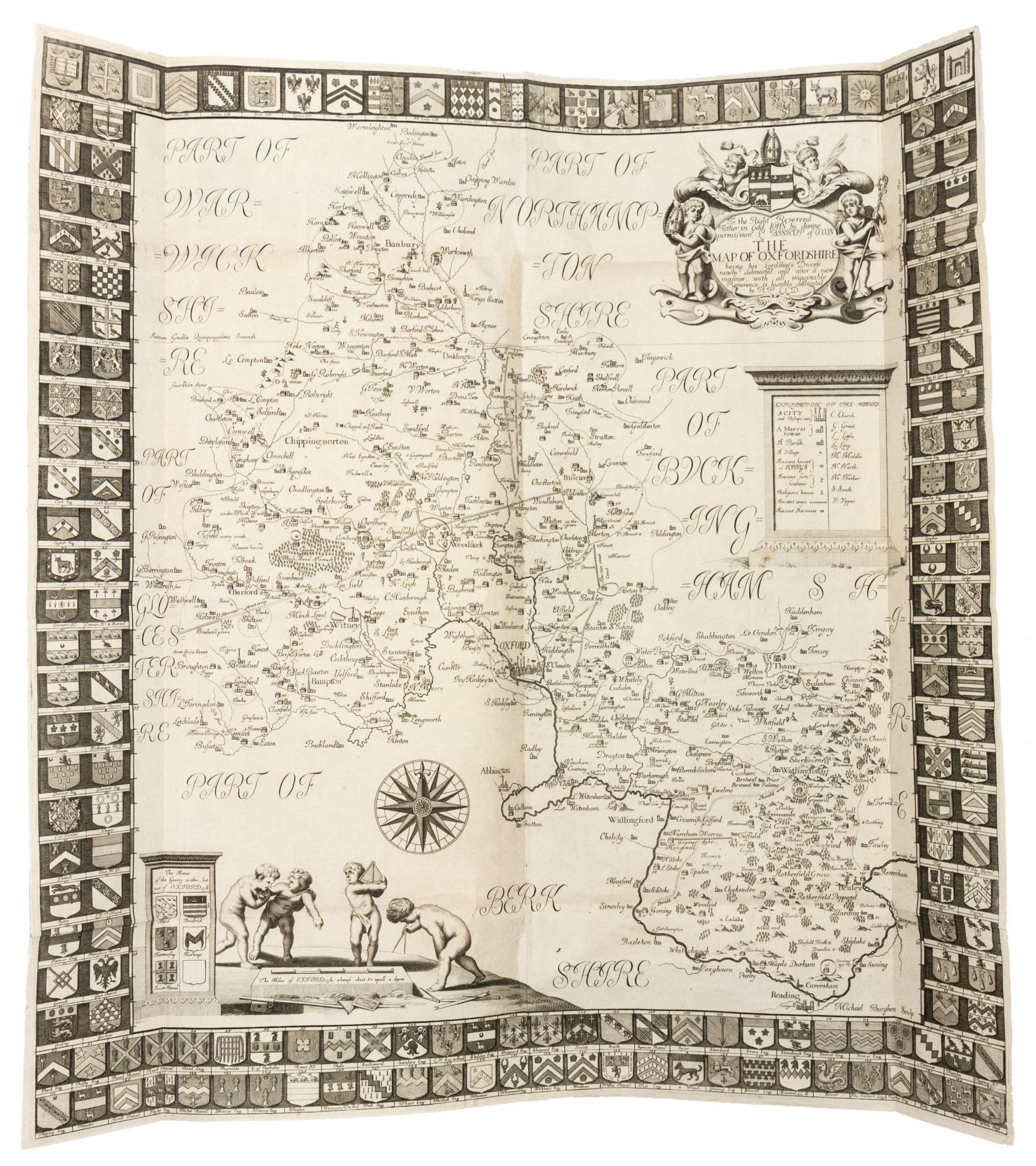

Leave a Reply