
LITURGY

Use of Sarum

[Book of hours [manuscript] : use of Sarum]
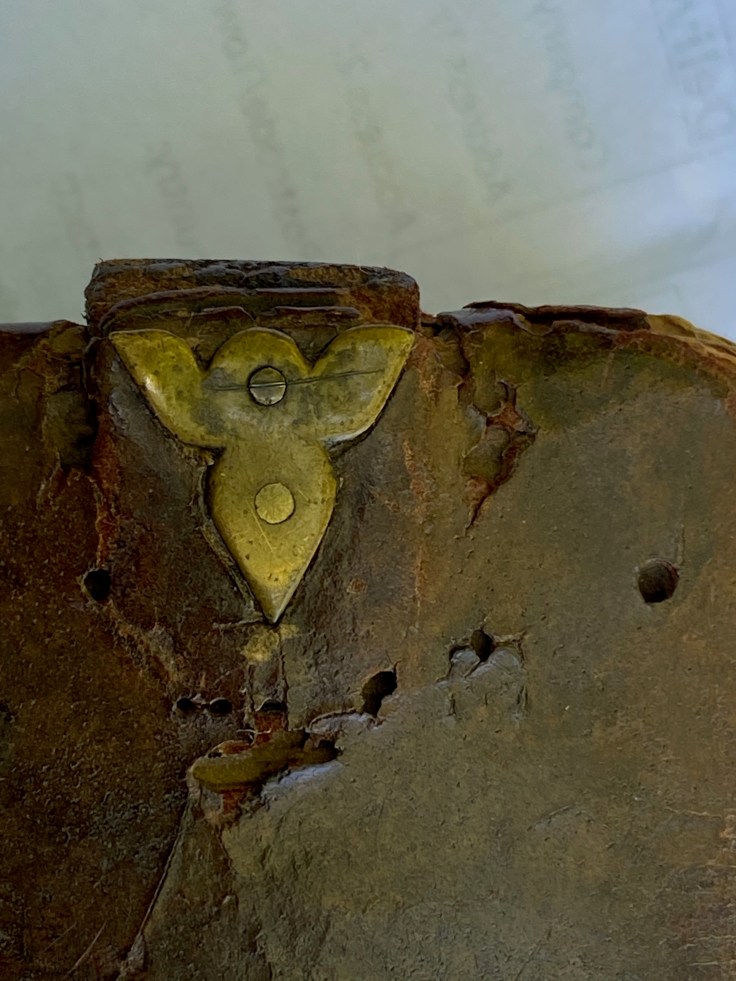
Duodecimo: 11 x 8 cm Flanders or Northern France (St. Omer?), ca. 1455–1470, Bound in its original binding of calf over wooden boards sewn on alum tawed cords. .Many of the pages still have their ‘prick marks” This manuscript was made c. 1470 in Latin on 123 vellum leaves (and several blank sheets), 17 lines to a page, with 4 large initials in fine penmanship in blue and red (occ. heightened with some gold), many smaller initials in pen and rubricated in red, contemporary leather over wooden boards, ribbed back, remains of clamps, vellum endpapers.

see
¶ Scot McKendrick, Flemish Illuminated Manuscripts 1400-1550 (London: British Library, 2003),
Janet Backhouse, Illumination from Books of Hours (London: British Library, 2004),
Eamon Duffy, Marking the Hours: English People and Their Prayers 1240-1570 (New Haven: Yale, 2006), . Item #730

Contents
a1(blank) 13 leaves,Calendar .with English saints.
Followed by the Hours, Use of Sarurm! 8 Leaves +44
Septem. Psalms 10 leaves
Litnay of saints 2 leaves
Suffrages of prayers to the saints 11 leaves
Office of the Dead 43 leaves
Making it most likely English or for English users. ¶Since each Book of Hours was custom made, the calendar would contain local feast days of importance to the owner of the manuscript. Important liturgical days were written in red which gave rise to the term “red letter days” to denote important holidays or events, even secular ones (Gwara, 2017).
¶The Sarum Rite was the liturgical form used in most of the English Church prior to the introduction of the first Book of Common Prayer in 1549. Like most of the liturgies of the Church at that time, it was extensive and complicated. The Use of Sarum, was developed by St. Osmund, Bishop of Sarum or Salisbury. Before being ordained a bishop, Osmund was a Norman nobleman and his ordering of the rites incorporated some of the Norman liturgical traditions (Bergh, 1912).

Price: Sold
ShareFacebookTwitterPinterestEmailADD TO CART




Leave a Reply